
Wren
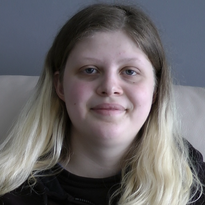
Wren entered care as a young child and left when she turned 18. She had mixed experiences in foster care and always hoped to live with her father. Although social services supported some contact, the Covid-19 pandemic made things more difficult, and her planned move was delayed. She did eventually live with her father for a year before starting university. Wren had two personal advisors while leaving care. She found her second advisor especially helpful and supportive – they gave her clear advice, explained her options, and made sure she knew what support was available. She is still in contact with them today and values their continued support.
Wren is a White British woman in her early twenties, currently studying towards a degree. Wren spent over 10 years in the care system before moving to independence at the age of 18.
More about me...
I now live independently and am passionate about improving things for care leavers. Alongside my studies, I advocate for more support and visibility for people who have been in care. I believe care-experienced young people should be heard and involved in shaping the systems that affect them. I am currently working on a documentary about leavers’ experiences, which i hope will help other young people feel seen, understood and less alone. I want to raise awareness about the realities of leaving care and push for more support, better planning, and genuine listening across services.
Wren pushed for change because she didn’t want future foster children to go through what she did.
Wren pushed for change because she didn’t want future foster children to go through what she did.
Yeah, I’m a big advocate for care leavers and that’s coming into the filming and, you know, doing all this stuff, like I wanna advocate for foster kids ’cause it’s... they’re just not listened to, you know, at least in my experience. So, like the work that I’m doing now is really important to us, that’s why I’m doing it, you know, so people don’t have to deal with what I had to go through at least.
So, you’re hoping the film that you’re making at the moment, that will be also part of getting those views heard?
Yeah. I think that it’s gonna be an opportunity to obviously get the opinions and voices out there, but also get some awareness, ’cause I don’t think people outside the system know what we have to deal with, you know? That whatever position you’re in within the care system, so I’m just trying to get my voice heard and listened to.
Wren said her carers spoke badly about her father and because she was labelled ‘vulnerable’ her school made her feel like she was in a maximum-security prison.
Wren said her carers spoke badly about her father and because she was labelled ‘vulnerable’ her school made her feel like she was in a maximum-security prison.
Yes. So, I was in foster care for about [number of] years. So, when I was [age] years old I moved into care, and I left when I was 18, so I spent quite a while in there, but... yeah.
So, you moved in with your dad: was that in your pathway plan, or...?—
Oh, they didn’t want that happening – they hated my dad – absolutely hated him. And they wanted to send me... my carers would slag him off daily, which was normal as well. My social worker didn’t like him, didn’t keep up with him, didn’t like tell him about anything. He would turn up... you know, he was the only one that would turn up to every single meeting, to every single like performance, you know, and he’s been there from the start, so yeah, that even though I was saying, “I want to move in with my dad,” they were like, “We don’t think that’s a good idea,” and I’m like, “Well, it’s my choice, and not yours,” you know?
So, when I was obviously a foster child, there was... because of my past before, I’d went into care, a lot of like people within who were dealing with me, were concerned that something bad would happen because I was vulnerable at the time. So, because of that, it was... school was... I’m not exaggerating on this, it was like a maximum-security prison: I couldn’t go the toilet on my own, I couldn’t go to lunch on my own, I couldn’t... like I had to have a teacher take us everywhere and I had to come back to this like unit that was in the school, and it was just horrible. I dealt with that for about three or four years while I was in school, but yeah, that was... And obviously when I was older, I started noticing the differences between obviously being in a mainstream school, and a lot of the kids had quite a bit of freedom, within reason, and then there was me. It was, huh, like having a warden by my side just 24/7 and I just... it was a horrible experience, it really was.
Wren said she didn’t want anything more to do with care after turning 18. Her pathway plans reflected what professionals thought was best, not what she wanted.
Wren said she didn’t want anything more to do with care after turning 18. Her pathway plans reflected what professionals thought was best, not what she wanted.
So, I did actually have that from the [leaving care scheme], from the age of 16, they did put a plan in for me, but as soon as I turned 18, I’m like, ‘I don’t want it anymore,’ you know? I think I asked for it back because my decisions had changed, and I think it was like a couple of months ago my PA came out and did it with us. I think it was the pathway plan, I’m not 100 percent sure, but yeah, it was something to do with that anyway. But yeah, I... I do know about it.
Yeah, it was like after I left care, I didn’t want anything to do with care, and that included the pathway plan, so anything, absolutely anything at all, even if it was something small, I just didn’t want anything to do with it. But yeah, I just decided in the end it might actually be helpful, so I brought it back, huh.
I guess for the pathway plan specifically, how far do you think your... your wishes were taken into account there?
I think after I left care, they were more listened to, or more respected, and obviously the pathway plan when I was 16, it was their decisions over me, it wasn’t what I wanted to do, so it was like they were gonna say, “Oh, well, gonna move here and do this, and do that,” and it just didn’t reflect any of the decisions I’d made. So I expected that when I was leaving care, so that’s why I cancelled it in the first place and then brought it back. But yeah, I think definitely when I was older, like I brought it back as I was being listened to a lot more.
Wren wished she had been taught more social skills and how to run a household.
Wren wished she had been taught more social skills and how to run a household.
So, when I turned 16, things became like a bit different. So we were, with social, social services, I had this section of social services where it was called the [name of leaving care scheme], and that was basically giving you a social worker that would help you transition into independence and adulthood, and they’re supposed to take you through like the basics of how to budget, how to cook, how to set off the washing machine, how to pay rent. They didn’t do it my case, but that’s what should have happened in that case. Yeah, as, as far as now, I guess I’ve really had to learn everything myself.
So, thinking about when you’re 16, 17, getting ready to leave care, in an ideal scenario, what kind of preparation would have been useful for you at that point?
I think definitely running the household in general. So, like how to pay electricity, you know, maybe do some research on what potential suppliers I could use for the internet, for gas and electricity, how to pay rent; I pretty much didn’t learn that from them.
I think that maybe like, oh, this is kind of hard to explain as well, but something on a more personal level: so, I didn’t have many friends growing up, I was under a microscope the whole time, but I, I just didn’t have any true genuine friends, and I think maybe sitting down with us and maybe teaching us certain social skills, that might have improved, and I did have that throughout school, but it was for kids with autism and it wasn’t for somebody like me. So, it was a bit, it wasn’t personalised to me personally, so that’s why I struggled with that when I was younger. Like I’m completely fine with my social skills now, but, you know, I had a lot of trust issues and I put my trust in a lot of people who were just not genuine, and I wish I would have gotten some support on that as well ’cause they would have been able to help with that, yeah.
Wren said she went to her dad to learn life skills because her social worker wasn’t listening to her.
Wren said she went to her dad to learn life skills because her social worker wasn’t listening to her.
So, I was not taken seriously every time I’d... you know, like whether it was trying to ask questions, or, you know, asking to do like certain things like: “Can you show us how to do a washing machine?” There was always an excuse as to why they couldn’t do it, which is wrong because they should have been doing it. Yeah, at that point I just went to my dad after sneaking out of his, even though I shouldn’t have been, huh. But yeah, so I just went to my dad ’cause I... I just wasn’t being listened to by my social worker at the time.
Wren said her school was like a maximum security prison, and she dreamed of the freedom she’d have when she turned 18 and could live with her dad.
Wren said her school was like a maximum security prison, and she dreamed of the freedom she’d have when she turned 18 and could live with her dad.
So, when I was obviously a foster child, there was... because of my past before, I’d went into care, a lot of people within who were dealing with me, were concerned that something bad would happen because I was vulnerable at the time. So, because of that, it was... school was... I’m not exaggerating on this, it was like a maximum-security prison: I couldn’t go the toilet on my own, I couldn’t go to lunch on my own, I couldn’t... like I had to have a teacher take us everywhere and I had to come back to this like unit that was in the school, and it was just horrible. I dealt with that for about three or four years while I was in school.
So, I was preparing with my dad like from obviously the age of 16 and I started sneaking out and seeing him, and I remember the day, I went to my dad’s home for the first time, and it was just like, right... I’d... like from the start it was, I would always talk about moving in with my dad when I turned 18 and I pretty much dreamed for the day to happen ’cause I’d have all the freedom I could ever want.
Wren planned to move in with her dad after care, but the move was delayed by Covid restrictions.
Wren planned to move in with her dad after care, but the move was delayed by Covid restrictions.
So, I was preparing with my dad from obviously the age of 16 and I started sneaking out and seeing him, and when I had... I remember the day I went to my dad’s home for the first time, and it was just like, right... I’d... like from the start it was I would always talk about moving in with my dad when I turned 18 and I pretty much dreamed for the day to happen ’cause I’d have all the freedom I could ever want. And then Covid hit and that was just an absolute nightmare, it was just... oh, it just crushed everything. But I had ended up moving in with my dad for about a year and then I started university and moved to [city] for my degree, ah, yeah.
Basically I... around that time, social services started putting this thing in place where I would go to my dad’s like twice, like every fortnight for one night a week I’d stay over his so I could get prepared for moving in with him. Everything was great, and I’d see him pretty much every day anyway, you know, if he wasn’t at work. And that that stopped and I... that did like put a lot of damage on my mental health. Obviously, Dad’s the most important person in my life, you know, and it just broke us when I couldn’t see him. So yeah, I did end up bending the rules a bit and going out to see him, even though I shouldn’t have been, I know I shouldn’t have been, but I did. And that was a horrible day as well, but, you know, at least I got to spend the day with my dad, so yeah, it’s... When I did eventually move in with my dad, things got a bit easier, ’cause I fought with my social workers for months, and months, and months to just move in with my dad when the pandemic started. I’d only had a couple of months left until I was 18, and they wouldn’t grant that for us, and that also angered me a lot and, you know, I was pretty upset, but... yeah.
Wren was settled in her home in a quiet neighbourhood with kind neighbours and a nice view.
Wren was settled in her home in a quiet neighbourhood with kind neighbours and a nice view.
It’s quiet. The neighbours are really nice, that this area’s really nice, and this is meant to be an area that’s rough, huh, which shocks me because it’s not. This is the ‘lower section’ they call it here, so there’s like two different sections of this area that I’m living in, and this is the lower one, and the other side’s the upper, but I’ve had no issues here the whole time I’ve been here; it’s quiet. I’ve got a lovely view outside of there, and yeah, I’ve got a nice big kitchen, so I can cook and make food, and I love it; it’s perfect.
Wren was given a choice between year-round housing or a 44-week contract for her university housing.
Wren was given a choice between year-round housing or a 44-week contract for her university housing.
So, there was a choice between, I think, it was 51 weeks or 44 weeks. So, the 51 weeks was the whole year, so that included the holidays as well, or there was 44 weeks. So it would be, like, you’d come in September, but you’d leave in June, so you’d have like the summer holiday to just move back in with whoever. Yeah, that’s how it worked with my one.
Wren said university was expensive and she was left with very little money after her student finance came in.
Wren said university was expensive and she was left with very little money after her student finance came in.
I stayed there for two whole years and I’d had enough of the rising prices, it was very, very expensive, very expensive, and it made me lose my mind half the time ’cause I’d be left with like £800 out of the three grand that I’d gotten, and it was just a struggle, huh, yeah.
Wren felt well supported by her new personal adviser, who she called the ‘master of universities.’
Wren felt well supported by her new personal adviser, who she called the ‘master of universities.’
So, I’ve had two PAs. So, the first one was assigned to me and it was just basic, like paying for things, like decorating my room, and stuff like that. Eventually I spoke to the PA before the one that I had now, and I said, “I’d like to go to university and pursue it,” and he doesn’t really specialise in that, he’s just there to support, so he moved me onto my current PA, and he knows everything about university, like he’s really, really good at it, like he knows how to keep in touch with people and, you know, refer people you know? I know there’s a lot of universities that ask if you’re care experienced now when you apply, and yeah, he was just really good with all the information, and he knew stuff about bursaries that I didn’t even know about, and it’s... like, yeah. And I’m pretty sure he’s had people just go to every single university in the [region of England], so he just knew everything. You know, he’s like the master of universities, like he just knew everything that people need in the [region of England], so yeah, he helped us through that, and also getting me some advice, and supports me with finding jobs as well, yeah, that.
Wren talked about her skills in music, filming, editing, and immersive technology, and how these could lead to careers in producing, directing, gaming, or coding.
Wren talked about her skills in music, filming, editing, and immersive technology, and how these could lead to careers in producing, directing, gaming, or coding.
So, I do have experience in music and filming, and editing, so that could take me anywhere: I could become a musician, I could become a producer of music, I could become a producer of filming, I could go into editing, I could go... I could become a colourist within editing and like I could become a director. As far as the immersive and creative technologies, that would take me into more of a tech gaming job, or like a computer science, which my brother’s actually doing, so I could become like a computer science engineer. I think you might need an engineering degree, so that’s slightly different. But also coding itself is a job, so coding video games is definitely one as well, so I’ve got a variety to choose from, yeah.
Wren said she trusted her dad for emotional support, but also relied on her personal advisor who was supportive and reliable.
Wren said she trusted her dad for emotional support, but also relied on her personal advisor who was supportive and reliable.
I’d say my dad, but recently I think... I think this whole situation of being in foster care’s... has damaged him more than it’s damaged me. So, like I go to him about my issues in general and he’s always there to support us, So I go to my PA about any issues ’cause he’s obviously within the care system and he’s supportive and reliable, so I’d probably go him as well.
Wren would seek support from her dad or her PA as they were both reliable.
Wren would seek support from her dad or her PA as they were both reliable.
I’d say my dad, but recently I think this whole situation of being in foster care’s... has damaged him more than it’s damaged me. So, like I go to him about my issues in general and he’s always there to support us, so I go into my PA about any issues ’cause he’s obviously within the care system, and he’s supportive and reliable, so I’d probably go him as well.
Wren explained that not being able to see her dad during Covid was devastating and damaged her mental health.
Wren explained that not being able to see her dad during Covid was devastating and damaged her mental health.
So I was preparing with my dad like from obviously the age of 16 and I started sneaking out and seeing him, and when I had... I remember the day, I went to my dad’s home for the first time, and it was just like, right... I’d... like from the start it was I would always talk about moving in with my dad when I turned 18 and I pretty much dreamed for the day to happen ’cause I’d have all the freedom I could ever want, and then Covid hit and that was just an absolute nightmare, it was just... oh, it just crushed everything. But I had ended up moving in with my dad for about a year and then I started university and moved to [city] for my degree, ah, yeah.
Basically I... around that time, social services started putting this thing in place where I would go to my dad’s like twice, like... like every fortnight for one night a week I’d stay over his so I could get prepared for moving in with him. Everything was great, and I’d see him ev... pretty much every day anyway, you know, if he wasn’t at work, and that that stopped and I... that did like put a lot of damage on my mental health. Obviously Dad’s the most important person in my life, you know, and it’s... it just broke us when I couldn’t see him.
To the good ones, carry on with what you are doing and to all foster carers remember to treat the foster child like your own.
To the good ones, carry on with what you are doing and to all foster carers remember to treat the foster child like your own.
So I would say for the good ones, again, keep doing what you’re doing. As far as the bad ones, I’d say, you know, there’s... every foster carer should be treating the foster child like their own child – that’s the way it should be – that’s the way it has to be ’cause it’s just not gonna work out otherwise. Look after those kids, even if they’re not your own, ’cause of the... they’re gonna need that emotional support and you just need to be there for them when they’re gonna need it. I’d say listen to the foster child again, you know, maybe come up with some sort of agreement if, you know, fall out, whatever the disagreement’s about. Just be open and honest as well is a big one, it’s a very big one. Even if it hurts, the foster child’s gonna appreciate it more for you being honest with them, yeah, yeah.