
Ninna
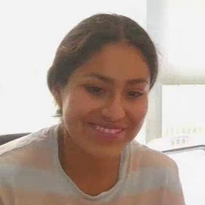
Ninna lived in a children’s home for several years before preparing to leave care. Around the same time, a former foster carer – who had meant a lot to her – passed away, making the transition even more emotionally difficult. Leaving care was not a positive experience for Ninna. She felt unprepared, was not asked about her preferences, and did not feel listened to – especially in her wish not to live in a big city. Thankfully, she had strong support from a carer she met in the children’s home, who continues to help her with practical matters like accessing benefits and building her independence. She is also grateful for the ongoing support of her school and personal advisor.
Ninna is a Peruvian woman in her late teens who spent most of her adolescence in the care system. Nina now lives with her carer who she met during her time in a children’s home, and who has been a strong advocate for her throughout her transition out of care.
More about me...
Being care-experienced often means that decisions are made for you while you’re growing up, and then suddenly, you’re expected to manage everything alone. That imbalance has been tough. I’m glad to feel more independent now, but I want people to understand how stressful it is to navigate adulthood after growing up in care.
I believe every child in care should have at least one trusted adult to guide them through leaving care and into independence. I’ve been lucky to have that, and I know how much it’s helped me.
Today, I’m actively involved in my local community and sports clubs, and I hope to stay living with my carer for as long as I can. Their support has made a real difference in helping me feel safe, seen, and ready for the future.
Ninna, who lived in a children’s home said she always had to wait for professionals to agree before she could do things while she was in care.
Ninna, who lived in a children’s home said she always had to wait for professionals to agree before she could do things while she was in care.
Ninna: Yes. So, I feel like I’m really liking being 18... well 19 now, and I’m really liking being treated like an adult, and also, ’cause when I was looked after, I feel like there was so many... like everything was impossible, like there was so many things you had to go through to do just like one activity, so many people had to agree, ’cause there was just a… I don’t know how to explain.
Carer: Yeah, all those... ‘cause there was a quite a big team around Ninna—
Ninna: Yeah.
Carer: —and it felt like every single person in that team had to be there at some meeting to be able to make a decision about anything—
Ninna: Yeah.
Carer: —and it was just... you know, it was just endless,—
Ninna: Yeah.
Carer: —you know, kind of just to get a decision made. Whereas, you know, in a household, a parent would make that decision quite quickly,—
Ninna: Yeah.
Carer: — and it would be like: “Yes, you can do that,” or, “no you can’t,” and it would kind of be a quick answer, and then you either do it or you get over the fact that you’re not allowed to, you know?
Mm.
Carer: It... it’s... it was massive, wasn’t it?
Ninna: Yeah. But like today, I’m going to go to football, and [PA Name] doesn’t know about thing,—
Carer: No.
Ninna: —but she doesn’t care because I’m an adult and I can say I want to go and play football, so I can do that, so it’s lovely.
Ninna didn’t have a pathway plan until after she turned 18, and before that her views weren’t sought or listened to, which left her feeling upset.
Ninna didn’t have a pathway plan until after she turned 18, and before that her views weren’t sought or listened to, which left her feeling upset.
Carer: From Ninna’s perspective, she wasn’t really involved in conversations about what might be a suitable move on for her, and Ninna was always very clear that from the very beginning that she didn’t really want to live in [city],—
Ninna: Yeah.
Carer: —which was her home authority, and that she didn’t really want to move somewhere that there was lots of things that were worrying for her about where she might go and what that would be like, because she’d been in a children’s home for a long time, and I think you knew what was hard about that, didn’t you?—
Ninna: Yeah, yeah.
Carer: So you went on the visit and then just got really, really upset,—
Ninna: Yeah.
Carer: —so upset that they just stopped the visit and then they kind of seemed to then go: ‘oh, gosh, I suppose it might be better if we asked you—
Ninna: [chuckles] Yeah.
Carer: — and involved you a bit more,’ it felt a bit like that, didn’t it?
Ninna: They took a step back, but yeah,—
Carer: Yeah, they took a step back that.
Ninna: —They were like ‘okay, let's leave it ‘til after Christmas,’ so...
Carer: And then they said... well, you know, her birthday wasn’t until [month], so she was perfectly able to stay in the children’s home until [month] anyway without any special issues, you know without any concerns about Ofsted or anything, so... and I think at that point, you and I had had a conversation about maybe you moving back in with me once... and obviously that I would start the assessment process to be care... a Shared Lives carer. So, after my husband died then I said, “Come on, yeah, OK, let’s... let’s have another go at living together.”
Ninna: Yeah.
Carer: And I... but I was living in [county] and Ninna was in [city], and then it was a bit more smooth, wasn’t it,—
Ninna: Yeah.
Carer: —because there was a plan and Ninna was involved in that plan and wanted that plan.
Ninna wished she had been given more opportunities to get out into the community before she left care.
Ninna wished she had been given more opportunities to get out into the community before she left care.
Ninna: But I think that’s quite sad because there was a lot of people in my home that they’re... because we had a school in the home so there was a classroom, but then they never really go out anywhere and make new friends and meet new people, so it’s just like you just get stuck in this home and you never meet anyone else and then you don’t have other people that can tell you about things and stuff like that.
Oh, OK.
Carer: Yeah.
So, there weren’t those kinds of opportunities to go out, or...?
Ninna: No. Well, I feel like that’s maybe something and people from... I don’t know, like maybe mentor young people, I don’t know, because, yeah, I feel like... yeah, I don’t know, I don’t know what I’m trying to say.
Carer: I think what you’re talking about is that if you go to school and go and live in a children’s home, then there’s no opportunity to learn about life and options and choices and that what other people are doing with their life, you know other young people of your age,—
Ninna: Yeah.
Carer: —because you don’t see them, and you might see them virtually, but you don’t see them, the real thing, so that is quite difficult, yeah, it’s really easy to not get information like that.
Ninna: Mm.
Carer: Mm.
Mm, and it’s quite a pivotal part of your life when you’re starting to approach, you know, adulthood and...
Ninna: Yeah.
Carer: And I think that when you went to college, you didn’t really know if you could make friends until then,—
Ninna: No.
Carer: —because—
Ninna: Well and no one else thought they could.
Carer: No. But... but because... well, you didn’t ’cause you were in a school that hardly... that almost nobody else went to anyway, ’cause it was in the children’s home,—
Ninna: Yeah.
Carer: —so you can’t practice—
Ninna: No.
Carer: —just that normal social stuff that you do. And I remember you sort of saying, “Oh, it’s really great, I’ve got friends,” and I was really pleased ’cause I was like, well, you don’t, you know, and in the children’s home you know, they’re not bringing bits of different lives—
Ninna: Don’t see anyone.
Carer: —and sharing them with you.
Ninna said professionals treated young people’s 18th birthdays like a surprise, only starting to plan their move at the last minute.
Ninna said professionals treated young people’s 18th birthdays like a surprise, only starting to plan their move at the last minute.
Ninna: All my other friends that lived in the same home as me, so there was two people that I grew up... left, who... after care before me, like a couple of months before me, and then my other friend who got out of care a couple of months ago, and it was like everything was so rushed with them as well, it was literally like it was a big surprise that they were turning 18. But obviously, they’ve been in care for years, so everyone has known they were gonna be 18 that day, but it was literally like a week or two before they were all running around like headless chickens trying to look for accommodation for them and it was just crazy and they were just...
Carer: It was.
Ninna: It was... it was going crazy, but every person that had left care from the home I was in, was just no planning at all and it was like... yeah, it just...
Carer: Yeah, and all of a sudden it’s like: ‘oh, my God, you’re 18,—
Ninna: Yeah.
Carer: —we’ve got to have a plan,’—
Ninna: Yeah, this week.
Carer: —and then it’s like: ‘where you gonna go? And you’re gonna go there and you’re gonna go and view it and you’re gonna...’ and you’re just like—
Ninna: ‘You’re gonna go view it on Tuesday and you’re gonna go move into on Friday,’ it was literally like that for all of them.
Ninna said covid made things harder when her children’s home stopped all visits, leaver her unable to see the people she was close to and feeling alone.
Ninna said covid made things harder when her children’s home stopped all visits, leaver her unable to see the people she was close to and feeling alone.
Carer: Well, I think there was the restrictions that everyone had,—
Ninna: Yeah.
Carer: —and then there was the things about that were because you were in children’s home.
Ninna: Yeah.
Carer: Yeah, I mean I remember it quite well, I must admit.
Ninna: What do you remember? That you weren’t allowed to see me?
Carer: I remember that I wasn’t allowed to see Ninna, and I was the only kind of person that... like we’ve known each other from soon after Ninna went into care, ’cause I managed the children’s home that Ninna lived in, which is when we first met, six years ago now, and I used to see Ninna as a sort of friend, and there was no kind of... they couldn’t manage that, so it meant that I couldn’t make... have contact with Ninna because they just were doing that whole: ‘no one’s allowed,’ and and not doing like individual risk assessments and individual plans around Covid, there was just this sort of blanket thing.
Uh-huh.
Carer: And I understand, you know, I was managing children’s homes then, I know that it was really difficult because there was no guidance and the guidance was very unhelpful, so I understand that, but it was very poorly done in terms of thinking about what individuals need to maintain their health and wellbeing and not just looking at infection, given that you’re in an environment where there’s lots of young people and there’s lots of staff and—
Ninna: Yeah.
Carer: —the staff were coming and going, and they’re going back home, and then they’re coming in again the next day, and they’re bringing their germs with them, and so that was quite hard, wasn’t it, about, you know...?
Ninna: And I wasn’t really seeing anyone, like I wasn’t happy in the home and I just... I was just, it weren’t really.
Carer: Yeah, that was quite tough—
Ninna: And I wasn’t seeing anyone else—
Carer: No.
Ninna: —it wasn’t like I was talking to my family or I had lots of friends that I could call, it was literally kind of you, [Name], and [Name], which was just... yeah, which was—
Carer: Yeah, and I think that was hard, because other people might have had family and they might say, “Oh, you can see your mum,”—
Ninna: Yeah.
Carer: —but like Ninna didn’t have a mum,—
Ninna: No.
Carer: —or anything like that, so—
Ninna: No, no.
Ninna enjoyed going to college, taking part in sports, and living with her shared lives carer, where she was treated like an adult.
Ninna enjoyed going to college, taking part in sports, and living with her shared lives carer, where she was treated like an adult.
Ninna: I go to college. I do some activities, and I’m gonna play football tonight at a football... at [sports club], and I see my friends and I hang out with [shared lives carer], and then—
Carer: Yeah, we swim and gym and then, yeah, and then she’s gonna start football club tonight, so, ’cause we haven’t lived here that long, we’re still finding activities that we can go and do some things together. And then as I say, football’ll be her first thing that you can go and do, and you’ve got friends now, haven’t you?
Ninna: Yeah.
Carer: - you've made through college and-
Ninna: Yes. So, I feel like I’m really liking being 18... well 19 now, and I’m really liking like being treated like an adult.
Ninna wanted to build her confidence, keep learning, and stay living with her shared lives carer for as long as possible.
Ninna wanted to build her confidence, keep learning, and stay living with her shared lives carer for as long as possible.
Ninna: Mm, I would like to probably work on my independence about going to different places, so like going out with friends by myself without [shared lives carer], or other carers, and go to the gym by myself at some point if I get a bike,—
Carer: Mm.
Ninna: —and stuff like that, you know? Taking the bus, meet friends alone, so I think like that could be... but I think we’re doing that... we’re starting to do that already, so.
Carer: Mm…. and then there’s lots of things that you want to achieve like for work and—
Ninna: Oh, yeah, yeah, work, work.
Carer: —learning and things.
Ninna: Yeah.
Carer: You’ve got lots of... you’re very ambitious.—
Ninna: Yeah, yeah.
Carer: Do you want to tell her a bit about some of them?
Ninna: Yes. Which one?
Carer: Well, you want to... you’re like... interested in acting.
Ninna: Yeah, yeah.
Carer: So...
Ninna: I’ve got into an acting programme in the summer, shall we chat about that?
Oh, OK.
Carer: The [theatre group] theatre’s summer course, which is very, very hard to get on and she got a place all on her own merit.
Ninna: Yeah.
Carer: You’re interested in—
Ninna: Work experience.
Carer: —work experience. And what kind of things were you looking at?
Ninna: Coaching for sports and kids, and animal rescue.
Ninna was thriving in her shared lives home, going to college and taking part in lots of activities.
Ninna was thriving in her shared lives home, going to college and taking part in lots of activities.
Ninna: So, they did lots of like assessments and they had lots of meetings with like adult social care and their...
Carer: Yeah, so that Shared Lives did the assessment, didn’t they?
Ninna: Yeah.
Carer: And then adult social care assessed Ninna for a social care package.
It sounds like you’re sort of advocating on Ninna’s behalf in a sense that you’re asking for all these things to happen?
Ninna: Yes, [shared lives carer] does a lot to help me and I wouldn’t manage without her because she’s the one that does my medication and anything, and all those things.—
Carer: Yeah. Yeah, and I think I kind of... I guess I kinda see that my role is making sure that
Ninna has what she’s entitled to, but also what she needs,—
Carer: —so there’s the two bits. There’s the bits of, you know, making sure that she gets the money she’s entitled to and the benefits and that that’s all kinda sorted for her, but also that she gets the support and services. But also that she’s got a good quality of life here living with me as well, that... you know, so she gets what she needs at college and... yeah. So I guess I probably do,. and also I am a social worker, so I kind of... although I don’t work in statutory social work, I’ve got a very good idea about what’s meant to happen. So, I used to manage semi-independent and children’s homes, so I kind of know what Ninna’s rights are and I bang on about it.
[chuckles]
And it sounds like it... you’re a good person to have on her side then?
Carer: Yeah, she’s kind of a good housemate though.
[chuckles]
Carer: Yeah.
So, what’s going on with the everyday life; what are you doing in your everyday?
Ninna: I go to college. I do some activities, and I’m gonna play football tonight at a football... at [sports club], and I see my friends and I hang out with [shared lives carer], and then—
Carer: Yeah, we swim and gym and then, yeah, and then she’s gonna start football club tonight. So... ’cause we haven’t lived here that long, we’re still finding activities that we can go and do, and do some things together, and then as I say, football’ll be her first thing that you can go and do, and you’ve got friends now, haven’t you?
Ninna: Yeah.
Carer: —you’ve made through college and—
Ninna: Yeah.
Carer: —we’re looking for things like work experience and—
Ninna: Yeah.
Carer: —stuff so that she can kinda do some of the catching up ’cause there’s bits that she’s sort of missed—
Ninna: Yeah.
Carer: —that other young people her age would have done, so things like work experience, so it’s like trying to catch up on some of those things.
College provided a space that was safe and predictable for Ninna.
College provided a space that was safe and predictable for Ninna.
Ninna: They’ve been fantastic, and I think college have been really good. So, I’m in a special unit in a mainstream college and... yeah, and which has been fantastic.
Carer: Mm. Yeah, they’ve been very good at working at trying to work out what you need and getting ready for you coming, and then kind of getting to know you and kind of doing what they say they’re gonna do, and they’re good at that, and I think that’s really important for... well, for Ninna and everybody really about that things are quite safe and predictable.
Ninna’s support was shared between her carer, college and her personal adviser, especially when she needed help with services or financial paperwork.
Ninna’s support was shared between her carer, college and her personal adviser, especially when she needed help with services or financial paperwork.
Carer: I think you do some things yourself.
Ninna: Yeah.
Carer: I think some things we do together.
Ninna: Yeah.
Carer: Some things college help with.
Ninna: Yeah.
Carer: So, it’s a bit of a sort of mishmash, and I guess, you know, if we’re stuck, we would ask [PA] if she knew anyone. Like when we were looking at respite, [PA].
Ninna: Yes.
Carer: —was looking at whether she knew anyone round here that could help with respite, so if we’re stuck with something, we’ll always ask her and she’ll see what she can do.
Ninna: Yeah, and we’ll ask about the OT and then she had...
Carer: Yeah, we asked about an OT referral when we were talking about that. [erm] Yeah, so she, she does.
Ninna: I think with the smaller things we can manage ourself, but some of the bigger things we ask for them to tell us.
Carer: Yeah, yeah. ’cause some things it’s easier because Ninna hasn’t got financial capacity, so the local authority hold all the money stuff, so it means that we don’t have things like proof that she gets PIP, or proof that she’s getting housing benefit, or you know those kinda things, so you kinda end up having to go to the local authority for something because you haven’t got a letter that says this, or we do... we have to do some of that stuff, that we, we need to, which is a bit laborious, but, you know, that’s just the way it is.