
Christine
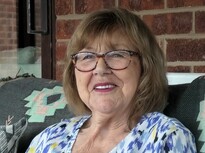
Christine is a keen gardener and spends the summer months looking after her garden. During the winter, she goes to meetings run by the Workers’ Education Association and art appreciation classes. She also sees her friends and grandchildren regularly.
Christine, aged 83, has a diagnosis of peripheral neuropathy. The medication she takes for her condition has caused problems with her memory. She is retired and used to work for the Income Tax Office. Christine is widowed and has two children and three grandchildren.
More about me...
Christine first started experiencing problems with her memory approximately five years after her diagnosis of peripheral neuropathy. She realised that she was unable to remember things that had happened a few moments before and was struggling with word finding and remembering people’s names. Christine spoke to her GP and her neuropathy consultant about her concerns and was told that her symptoms were due to the tablets she was taking for her condition. As her medication dose increased, her memory worsened. Christine made the decision to gradually reduce her dose to try and improve her memory, but her neuropathy became too painful to cope with. Instead, Christine has learned to live with her memory problems as she cannot be without her neuropathy medication.
Christine keeps herself busy during the week. She has an interest in history and attends two educational groups. She goes to talks on different subjects organised by the Workers’ Education Association and an art appreciation class. Christine has learned ways to remember what she is taught at these groups. She writes notes during the classes and then revisits them when she gets home. Christine also volunteers for a charity, helping to transcribe parish records so that they are available to people online.
As well as her interest in history, one of Christine’s favourite activities is looking after her garden. She sees her grandchildren regularly and cooks tea for them once a week. She also meets up for a drink and chat with friends who live locally.
Learning to relax is good says Christine, but it’s easier said than done.
Learning to relax is good says Christine, but it’s easier said than done.
I would say relax and don’t take yourself too seriously; that would be my comment. Because anything that changes about a person, because it’s personal to you you’re bound to, you don’t want that change, you want to be you and going forward and talking to people, and until you learn to relax and deal with it then you’ll never be that person again. So that’s all I can say about it.
Yeah, that’s a, that’s a good piece of advice.
Mm.
So, do you feel like you have managed to achieve that, you know, relaxing and becoming yourself again?
More or less; I’m a lot better at it now than I was, yes [laughs] it’s easy to say those words but it’s not easy to always do it, yes.
Christine loves gardening.
Christine loves gardening.
I love it. [Interviewer laughs] I always worked and never had time and, and I love doing the garden.
I was just going to say your garden’s so nice.
[Laughs] Yes.
So, you do all that yourself?
Well, I’ve just hired a gardener but he’s not very good [Interviewer laughs] and I might have to; he’s coming tomorrow, I think, again, so I’ll see how, what he does tomorrow, but.
Well, that’s very impressive that you, you keep all that yourself; it’s really pretty.
It’s, it’s lovely because I love to do it, you know, and I would like good weather to be out in the garden all the time, so yes; that’s one of my main hobbies. [Interviewer laughs] So in the winter we’re mostly mixing with people but in the summer holidays then that’s time for me in the garden, yes, so.
Christine visualises her mind as a box of memories.
Christine visualises her mind as a box of memories.
I used to be able to – I had a really good memory and I used to be able to put things into my, sort of the box that you save things in in your mind [I laughs] and I could pull them out of there anytime, but I can’t now. It’s as though it’s gone and I’ve only got one way… I, my brain doesn’t multitask, so it thinks of that and then it, I concentrate on what I’m doing and then that, it’s disappeared out again.
‘Brain fog’ is related to the medication Christine takes for pain.
‘Brain fog’ is related to the medication Christine takes for pain.
I knew that when you got older that you couldn’t remember things; it was something that people always said to each other, you know, “Ooh, I can’t think, I get upstairs and I can’t, I, what have I come for?” sort of thing. But I was realising that I couldn’t remember things from a min, a second ago, in my head, I’m going to do that now, and I, I thought that was really strange, you know, that I; this wasn’t like normal, like just going upstairs, it was like I needed to do that, it was important, and it was only a second ago I thought it and then it’s gone from my memory. I found that I was missing my words and, really badly, and forgetting people’s names that I was sitting opposite. It would be that sort of thing that really got to me. I mentioned it to my husband at the time and he said, “Oh no, no, everybody does that, don’t, don’t worry about it, don’t worry about it.” I said, “I am worried about it,” I said, “it’s not just normal.” And so, I went down to the doctors and I said, “I’m really worried about this, I can’t remember things.” So, I was put on a, given a test that they give you at the doctors and I was fine, and they said, “It’s not your mem, it’s not your, your memory, it’s your tablets, you’re on such-and-such, Pregabalin makes you forget, it relaxes the nerves in the body, you have it for your neuropathy because it relaxes the nerves and then it; so, you don’t remember things as well. Well, when I went to see the, the consultant of neuropathy he said, I told him about it and he said, “Oh you’ve got, you’re not to worry about that, that is your tablets.”