
Tony and Moira
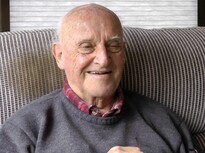
Tony, aged 84, is a retired organic chemist and lives with his wife, Moira. Tony has been assessed by the memory clinic and is awaiting a diagnosis, He visited his GP when he noticed that his memory had got worse over a matter of weeks.
Tony and his wife have always enjoyed travelling. When working as a lecturer in Hong Kong, Tony learned to speak Cantonese and Mandarin. Tony is still fluent in several languages but doesn’t travel anymore. Tony enjoys spending time in the garden at home.
More about me...
Tony has been told that he has dementia but is still waiting for results from assessments and scans to get a detailed diagnosis. The Covid-19 pandemic caused delays in getting assessed.
Once a week, Tony walks to the local shop to buy a paper. He wears a GPS tracker so that his wife can follow his journey in case he gets lost. He enjoys fussing dogs on his way to the shop as he misses owning a dog himself. Tony and Moira’s daughter has a dog which she regularly brings round to visit. Twice a week, Moira goes with Tony to dementia support groups. They use a local car scheme to get to and from the groups as they no longer drive. Tony enjoys talking to other people at the groups and playing dominoes and cards.
Tony has mixed feelings about delving into the past.
Tony has mixed feelings about delving into the past.
So do you, do you have photos of, of your travels then?
Moira: Yes, we do, and I know I’ve been told to get these, we’ve got loads of albums; this is one thing that he did very well, everywhere we went, all the countries we’ve lived in and been to, and even on holidays as well, he’s put them in albums. So, we’ve got I don’t know how many albums in my little office in there that.
Oh right. So, so they, they, it’s all recorded somewhere so you’ll be able to?
Moira: Yes, mm, it’s all recorded, and I’ve got quite a bit recorded as well but we don’t see that now because it’s on a different thing. But certainly, you know, they say, “Well why don’t you get the albums out.” And said, “Don’t you remember when we did this, and we went up there and.”
Tony: And then I says, “No, I don’t.”
[Laughs] So do you think, do you think you’d like to see some of the films or have you…
Tony: I don’t know, it’s mixed feelings, I think.
The garden is a source of enjoyment for Tony.
The garden is a source of enjoyment for Tony.
So, what do you like, Tony what do you like doing just in a general day? What sort of activities do you like, enjoy?
Tony: Well, nothing like I used to really.
Moira: No, but what do you do now though?
Tony: Potter round the garden really.
Moira: Mm.
Tony: Mow the lawn perhaps, fiddle around with the pond, collect dead leaves, empty, help empty the dustbins, put them out once a week – fairly mindless tasks.
Important ones that need doing, aren’t they? [Laughs].
Tony: Yes.
Moira: Mm.
Tony: I suppose so, yes. And it, it gives you some, makes you feel a bit a useful, well without you straining.
You’ve got a fabulous garden.
Tony: Yes, which I need really. I think that’s about the only thing I’ve got left now; other, other things that require mindfulness I don’t do them anymore.
Moira: Mm. He’s always been a, a gardener, always liked gardening.
Tony: So, I just hope I don’t lose that.
I see you’ve got a bird table as well.
Tony: Yes, I enjoy that.
For Tony, it’s the interaction with different people that he finds stimulating.
For Tony, it’s the interaction with different people that he finds stimulating.
I mean do you enjoy going there, it’s quite a, you know, meeting other people, is it something you’d recommend?
Tony: I enjoy listening to other people I think is about it, and sometimes the game, card games and things are all right, but. Mostly I like, when other people are talking, it’s interesting, and I suppose meeting other people really because you do miss that.
So, you’re interested in sort of other people’s activities and lives and what they’ve got to say?
Tony: Well yes, different views, yes, yes. And that, and because you hear it on the television and things like that it’s not quite the same as, you know.
What do you mean?
Tony: Well, when you listen to television programmes, if we’re watching television in the evenings, you get a television play, people doing different things and people are interacting with each other. It’s not quite the same as real people, if I can put it like that.
Moira: You mean chatting to other people?
Tony: Yeah, or even listening, yes.
The questions in the MMSE seemed pointless to Tony.
The questions in the MMSE seemed pointless to Tony.
Can you tell me about what you did at the memory clinic; did they do any tests or assessments?
Tony: I can’t remember anything about it; Which is appropriate, I suppose [laughs].
Yeah, yeah, that’s absolutely fine. Sometimes they do like a clock face, you have to put a, a clo, things.
Tony: I remember something about a clock but it’s very vague.
Moira: He had to answer all sorts of questions.
Tony: Very vague, and a lot of questions that seemed, well I, I didn’t understand really, a bit, if you don’t know what’s going on it seems pointless, doesn’t it?
When we interviewed Tony, he was still waiting to hear exactly what type of dementia he has.
When we interviewed Tony, he was still waiting to hear exactly what type of dementia he has.
Well I would say suddenly I found I’d forgotten a great deal of things very suddenly, like within two or three days I said to my wife things like “Do you know, I can’t remember such-and-such.” And, and it just went pwoof like that.
Oh right.
So, I thought that can’t be normal [laughs] because until then I had no warning, nothing. I was just a normal, assumed it was normality and that was it, and then suddenly the memory seemed to go in a matter of days, weeks certainly, but possibly even days, very quickly.