
Derek & Lorraine
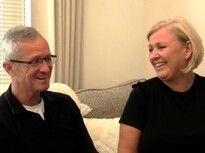
Every week, Derek attends support groups independently and visits the gym with his wife. He also spends a day with his youngest son who lives nearby. Derek benefits from technology which helps keep him active and independent.
Derek, aged 61, was diagnosed at the age of 56 with a rare form of dementia called Posterior Cortical Atrophy (PCA). He is a retired police officer and lives with his wife, Lorraine, and two cats. Derek and Lorraine have two sons and one grandchild.
More about me...
Derek first became concerned about his health when he was playing a game of Scrabble with his son at Christmas and couldn’t add up the scores. This was alarming for Derek as he had always been confident with maths and used to help his sons with their maths homework when they were at school. He booked an appointment with his GP but didn’t discuss his concerns with his wife as he didn’t want to worry her. Derek had an MRI scan and then received an appointment for the memory clinic. At first, he was told he had Mild Cognitive Impairment (MCI) but later he was diagnosed with Posterior Cortical Atrophy (PCA). PCA affects spatial perception, visual processing, spelling and calculation.
Derek used to play rugby and in his 40s was involved in a collision with another player resulting in a head injury which required surgery. Derek believes this head injury has contributed to his diagnosis. Derek takes Donepezil and Memantine for his dementia. Derek has always enjoyed sport but has stopped playing rugby and football. Instead, he regularly listens to sport on the radio and follows the Manchester City games. Derek sometimes plays golf with his sons.
Derek enjoys keeping fit and attends a gym with his wife. The gym has a supportive environment, and the manager has had a t-shirt printed for Derek which reads “I have dementia, what’s your problem?” Derek is proud to wear the t-shirt – it appeals to his sense of humour. He thinks that people are more understanding when they know about his dementia.
As well as keeping physically fit, Derek does jigsaw puzzles with his wife and takes advantage of technology using the smart speaker, Alexa, to practise mental maths. For Derek, his biggest loss is reading as he enjoyed reading a newspaper every day and would get through a book a week when on holiday. Unfortunately, PCA has affected his ability to read. He has tried listening to audio books but struggles to follow the plot.
Three times a week, Derek attends various support groups independently. For two of these groups, he has to travel by bus. After a few practice runs, Derek now feels comfortable with the bus route and is happy to ask for help at information desks if needed. Lorraine arranged for Derek to have a GPS tracker which is linked to her phone. When Derek goes out alone to attend his groups, he takes this GPS tracker and wears his dementia awareness lanyard. This gives him the confidence to approach members of the public if he needs assistance. One of the groups he attends arranges day trips and Derek particularly enjoyed visiting the zoo.
Derek’s wife, Lorraine, retired early to care for Derek. Derek feels that maintaining his independence is beneficial not only for him but also to allow his wife to take time for herself.
If you can’t change things, there’s no use worrying, Derek says.
If you can’t change things, there’s no use worrying, Derek says.
So, if you had a piece of advice to give to someone in a similar situation to you, what would it be?
Derek: I would say; I’ve been practising this [I laughs] don’t look back, look forward, because you can’t change what’s gone but you can do something to look forward. Because it’s this “why, why did it, why has it come to me?” I don’t take that all; and I sense a lot of people will do. Why is it me and not [name] or something like that or; and that, that resonates me, because Lorraine, Lorraine struggled quite a bit in terms of, you know, she loves me so much and it’s troublesome for her. And like we’ve touched on like, you know, we can’t change what’s there so forget about going there; that’s my thing now, I would say.
No, that’s, that’s.
Lorraine: Well Derek’s always said to me, “It is what it is.” But that doesn’t always help me [laughs].
Derek: No.
No. But you’re, you’re making the best of your situation.
Lorraine: Mm.
Derek: Yeah, yeah.
And, like you say, you can’t change things, so.
Derek: So why worry about it, yeah. It is what it is; I use that a lot don’t I?
Lorraine: Oh no, I’m in admiration for Derek, I really am, because he’s faced it head on from the beginning, he, he’s never detracted from his path forwards with it and, yeah, he, he has just met it head on really.
Derek: Mm.
Lorraine: Haven’t you?
Derek: Mm.
Lorraine: Yeah, and I, I think that’s great. And if I meet someone, I tell them how proud I am of my husband and how he’s dealing with this. He’s never; you know, and I’m sure there are times, and anyone would be lying to say they don’t have a little scared moment of thoughts, but that’s nothing to be, you know, feel bad about; I think it’s just how we are as people.
Derek: Mm.
Lorraine: But no, Derek is a real great guy in how he’s facing all of this and he still also tries to, gives me support, which for someone with his difficulties is an admirable thing to be doing. So, I’m proud of him.
Derek: Hey, well done.
Derek has always been keen on sport and fitness.
Derek has always been keen on sport and fitness.
Lorraine: Well you’ve even got a t-shirt; the gym where Derek goes in the next village have done a t-shirt and sweatshirt with, “I have dementia, what’s your problem?” on it, as a bit of humour, but also to let people know; and then if I’m in the gym with Derek, setting weights up and such, they’re not thinking what’s this weird woman doing in here [laughs] doing all, you know, because I’m not there participating, unfortunately, though I should [Derek laughs] so I’m doing all this for Derek and at least people have an inkling that Derek’s needing some assistance when he’s wearing these t-shirts and such.
Derek: Mm.
So, what do you tend to do at the gym?
Derek: Oh, pumping iron and all that [laughs] and a little bit of running about and; yeah, I do quite a lot.
Do you enjoy it?
Derek: Yeah, I love it; it’s, it’s a godsend for me because Lorraine can drop me there and go and have a few.
Lorraine: No, I don’t, I come with you.
Derek: I know.
Lorraine: I come with you [laughs] I’m your personal trainer [laughs].
Derek: No, because; that’s right, that’s right, yeah, yes. So many people! [laughter].
Lorraine: In fact, he’s begging for mercy at the end, aren’t you?
Derek: Yeah.
Lorraine: No more, no more.
Derek: No more, no more, Lorraine. [Lorraine laughs]
How often do you go?
Derek: Like two, two days a week, yeah?
Lorraine: Yeah, we try for a three day.
Derek: Yeah.
Lorraine: [son] normally takes you and then I try and do two extra days.
Derek: Mm.
Lorraine: Depending what we’ve got on the calendar to do, yeah. But he’s, he’s always been big on his fitness, as we’ve said. I mean previously, we’ve had to let stuff go now, but just here, within the home, he, you used to have your weights bench, didn’t you?
Derek: Yeah
Lorraine: And he used to do weights within the house didn’t you?
The doctor told Derek exercise is the best thing.
The doctor told Derek exercise is the best thing.
Lorraine: Oh, that was it, I was going to say about Dr [name].
Derek: Mm, mm.
Lorraine: And when you went and you got your mild cognitive impairment diagnosis, MCI, as they shorten it, Derek actually said to Dr [name], “What can I do to help myself with this?” And he said, “Top of the shop,” he said, “physical exercise.”
Derek: Mm.
Lorraine: He said, “That’s the top thing for you to be doing.” And, and reading up on it, it, it tends to be exercise is the top of the list with the dementia.
Derek: Mm.
Lorraine: And, and keeping physically active.
Well, if you enjoy it then that’s great; and you get to go with your sons as well do you?
Derek: Oh, very much, yeah, yeah, mm.
People are understanding when Derek is open about his dementia.
People are understanding when Derek is open about his dementia.
Lorraine: But, but we said, “If we tell people they allow for Derek, they’re more considerate.” You know, if he’s got his lanyard and he’s in the supermarket with me and not aware of people or whatever, but if they see the lanyard, they give Derek that space, whereas they might snap at someone else without, but when they see the lanyard and that it’s got “I have dementia” or, as I say, at the gym he’s wearing his t-shirts with dementia, then people allow and accept, you know, that Derek just needs a little bit more help. And generally we find people are still kind, you know, and thoughtful when they see these things. So, we find it far better to be out there with it than not.
Even though Derek has lived in the same village for years, he has made new friends since his dementia diagnosis.
Even though Derek has lived in the same village for years, he has made new friends since his dementia diagnosis.
Derek: I’ve got a, a new mate, didn’t we, with [name]?
Lorraine: Oh, in the village?
Derek: Yeah.
Lorraine: Yeah, yeah, we’ve got a very nice friend in the village, just literally someone we know from walking past his house for some years, and he’s been very nice with Derek, this particular person. An ex-fireman, isn’t he, [name]?
Derek: Yeah, and that’s the, that’s the connection, because I was.
Yeah, because you were a Police officer.
Derek: Yeah. We didn’t go to the same places but we got the understanding of how it was.
So, do you see him by yourself sometimes?
Derek: Yeah, yeah, yeah, yeah, I can call for a cup of tea anytime he says and we have a few drinks every now and again.
So, you go round to his house?
Derek: Yeah, either/or, yeah, or there’s a pub right next to, between them, so we might.
Oh, that’s handy.
Derek: Yeah, yeah, yeah, yeah [laughs].
Lorraine: Well, we’ll, we’ll go as a foursome, won’t we? We’ll meet him and his wife [name] and have.
Derek: [name] [laughter].
Lorraine: Have, have a drink [laughs] have a drink together, yeah. But no, they’re very nice. I think, I think that highlights somebody like him, and he doesn’t have to, you know, it was like we hadn’t seen them for a little while and just a week or two back he was at the front door, “Are you OK? We were worried. Are you, is everything all right?” But in a jokey manner; and he came in and had a cup of tea with us. And somebody like him, yeah, does highlight that we’ve not really known him very long or very well but, you know, we’ve, we’ve got friends that we’ve known well that we don’t see or hear from. But yeah, he’s, he’s a very nice person, yeah.
That’s nice that you’re making connections in your local area.
Lorraine: Mm, oh yeah. Yeah, and we’re lucky with our neighbours, aren’t we?
Derek: Yeah, yeah.
Lorraine: You know, people do say, such as; I spoke to a girl from across the road just yesterday and she’s in nursing, in management level nursing, but obviously a caring profession, and, you know, she’s since given me both her and her husband’s phone numbers and said, “If you need anything just call us, come to the door,” whatever; and that’s so nice, because, you know, they’re putting themselves out there, you know, potentially for me going, “Can you help me please with something?” But it’s just nice to know that you’ve got people close by, because it can be very lonely.
Being out in the garden is good for Derek and Lorraine.
Being out in the garden is good for Derek and Lorraine.
Lorraine: Oh yes, yeah. No, I think for both of us, we don’t stay in the house much, you know, it’s not that we don’t like being home but I know that for Derek and myself, we need to get out there. Shame the weather’s not better; we do enjoy the garden, don’t we?
Derek: Yeah, yeah.
Oh, do you do some gardening, Derek?
Derek: Yeah, yeah, yeah.
Are you any good?
Lorraine: Well generally weeding.
Derek: Lorraine, Lorraine puts it all back where I put it [laughter] but yeah, we do gardening [laughs].
The recycling is quite complicated but Derek and Lorraine laugh about it.
The recycling is quite complicated but Derek and Lorraine laugh about it.
Lorraine: Yeah, I’ll give him tasks. And as far as the house goes, I mean I did have him vacuuming the other week, so I just let him loose with the vacuum, and he still has the bins job, taking rubbish, but.
You get all the best jobs, Derek.
Derek: Exactly, yeah, yeah.
[Laughs] Hoovering and bins and weeding [laughter].
Derek: Yeah.
Lorraine: But all you get from him, because obviously there’s different colour bins, so it’s like, “This is for the green bin,” which.
Derek: I set, I’ll set off.
Lorraine: Which in this area’s the recycle.
Derek: “What colour was it?” [Laughter].
Lorraine: So, I’m going, “Green, green,” about three times for him getting to the front door.
Derek: “Was that green did you say?” [Laughter].
You need a flag system [laughs].
Derek: Yeah, yeah [laughs].
Lorraine: And then, then [laughs] he comes back it’s, “This is for the grey bin,” so [laughs].
Derek: Why don’t you put colours on them; that one, that one. [Interviewer laughs].
Lorraine: So, but I think it’s, you know, I think it’s important that he feels needed.
Derek: Mm.
Lorraine: I think we all need to feel needed by something, someone [laughs] whatever, but, but yeah.
Derek: Mm.
Getting the GPS tracker restored Derek’s confidence in going out alone.
Getting the GPS tracker restored Derek’s confidence in going out alone.
Lorraine: So, he’s got his lanyard on, which makes people aware he’s got dementia, and also we’re very fortunate that Derek’s got a tracking device, which is like a key fob, and literally that’s a GP.
Derek: Can’t get away [laughter], can’t get away.
Lorraine: It’s GPS tracked, GPS tracked [Derek laughs] and also it’s got a button on for an emergency call and that call comes direct to my phone if he needs me.
And then we got the tracker, which definitely gives you confidence doesn’t it?
Derek: Mm hmm.
Lorraine: And I know it gives me confidence, because I was worried.
Derek: But once you press the button you’ve got to speak very quickly and then get off [laughter] because it’s costing money [laughter].
Lorraine: Sometimes it does go off by accident, if Derek presses the button in his, in his pocket for, somehow and, yeah, so then I’m saying, “Do you need me? Goodbye if not” [laughs].
Derek: Go away, nice talking to you [laughter]
So, does that alert your phone then?
Lorraine: Yes, yes, so it rings me; so when I see Derek’s fob [laughs] displayed, it’s like, oh my gosh, what’s going on?
But it’s come in useful a couple of times.
Derek: Well, there were two people there and they knew what they were talking about and they helped me. I think it’s that part of it, if, if you put it out there, people will be helpful towards you; if you sit in a corner and don’t say anything you’re going to be sitting in this corner.
Yeah. So, you’re happy to wear your lanyard and?
Derek: Oh yeah, I put it out, me, yeah, mm hmm.
Derek does all sorts of sports and even goes for a picnic in the park with his group.
Derek does all sorts of sports and even goes for a picnic in the park with his group.
So, what do you do at that group, Derek?
Derek: It’s, that’s pretty much the same, we go for a walk quite often, we go and sit in the playing; what do they do? Cricket, not cricket.
Lorraine: Skittles.
Derek: Skittles.
Lorraine: Skittles you do, don’t you?
Derek: Yeah, skittles, sort of thing like that, yeah.
Lorraine: Yeah, you’ve walked up to [name] Park, don’t you, in [town]?
Derek: Yeah.
Lorraine: Because I’ve not been in there and he tells me it’s lovely in this park.
Derek: Yeah, yeah.
Lorraine: Oh, you’re doing a picnic in the park in a couple of weeks aren’t you?
Derek: Yeah.
Lorraine: And something else there, I forget what they were; was it, some sports thing, I forget [laughs].
Derek: Yeah.
Lorraine: I forget [laughs].
Derek: You roll it and it’s on the floor.
Lorraine: Oh bowls.
Derek: Bowls, that’s it.
Lorraine: Green bowls, bowling.
Derek: Game of bowls. I’m quite good [laughter].
After his first scan, Derek was given a diagnosis of MCI.
After his first scan, Derek was given a diagnosis of MCI.
Lorraine: And Dr [name] I think is psychologist there. And then we went and he diagnosed; well, the MRI had picked up ischemia on the scans.
Derek: Mm.
Lorraine: And then Dr [name] diagnosed you with mild cognitive, didn’t he, at that point?
Derek: Mm.
Lorraine: And you were still working and driving at that point, weren’t you?
Derek: Mm hmm.
So how old were you, were you then, when you first went to the doctors?
Lorraine: Fifty-six.
Derek describes the spatial problems with PCA.
Derek describes the spatial problems with PCA.
Lorraine: Well [name], one guy there, he’s ten years older than Derek and he’s got vascular dementia, but he helps Derek [laughs] and he’ll do you cups of tea.
Derek: Yeah.
Lorraine: And he just looks out for Derek, which is nice.
Derek: Basically with, with the cup of tea, it, if I, if I make one myself and then I try and put it down, I don’t know whether I’ve took it too far along and then.
Lorraine: Oh it’s.
Derek: I look back and it’s all on the floor because I’ve missed where I should have put it.
Lorraine: With, yeah, with the PCA Alzheimer’s, you know, it’s to do; like, you know, edges of tables can be a problem. In fact, I found a very good film on it the other night, didn’t I?
Derek: You did, yeah.
Lorraine: On the internet – was it; oh something, I Can See You, or something like that. But it was very interesting about the actual PCA.
Derek: Yeah.
Lorraine: And listening to people with PCA Alzheimer’s, describing how they see things, and the ultimate thing that’s said at the end by one guy is, “I can see but I can’t see,” and; because obviously the messages from the brain for Derek, so such as judging distance for things or even reaching out for something can be difficult for Derek.
Derek: Mm hmm.