
Mary
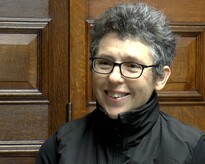
Mary’s sister-in-law was first diagnosed with menopause symptoms when she first began to experience memory issues. Four years later, she was eventually diagnosed with young-onset dementia. Mary and her family provide her sister-in-law with 24-hour care by organising when each person will look after her sister-in-law.
Mary helps care for her sister-in-law, who has early onset dementia.
More about me...
Mary and her family began to see changes in her sister-in-law’s memory when they noticed she would forget and lose things. When her sister-in-law went to the doctor, she was diagnosed with menopause symptoms and prescribed Hormone Replacement Therapy (HRT). However, Mary and her family continued to notice that something was wrong as her sister-in-law’s ability to work, drive, speak and perform basic tasks which got worse over the years. It took four years before Mary’s sister-in-law was referred to a dementia consultant and received a scan which showed she had early onset dementia at the age of 50. Mary and her family found that the delay in diagnosis was very isolating because, without an official diagnosis, there was no support available. Getting support for her sister-in-law was further complicated by her age since many charities are set up for much older people.
Mary, her brother (her sister-in-law’s husband) and parents provide 24-hour care for her sister-in-law. To help care for her sister-in-law, Mary moved back to her family’s town, as she felt that her parents were getting older and caring for her sister-in-law was becoming too difficult for them. Mary and her family are reluctant to get help from professional carers, as her sister-in-law becomes distressed when she is around people she does not know. Therefore, Mary and her family use an electronic diary and WhatsApp to discuss and organise her sister-in-law’s care.
Due to her sister-in-law’s age, some aspects of her care can be difficult. For instance, they have to lock the door as she is a “flight risk” and will leave the house, and because she is physically very fit, she is able to walk away and get lost. Behavioural aspects of Mary’s sister-in-law’s dementia make it hard to do activities outside of the house. However, Mary and her family try to keep regular events mostly to do with music, as music is something her sister-in-law enjoys.
Mary talks about her sister-in-law’s mobility in comparison to people who support her.
Mary talks about her sister-in-law’s mobility in comparison to people who support her.
But, luckily we’ve only had to call the police once and now she wears a tracker, so that, but even, if you’re with her out with her outside it’s a possibility that her mood will change just like that for no apparent reason and she’ll walk incredibly fast away from you. Of course, it’s not a problem for me, but that can be a bit of a problem for my mother who is 83. So, it’s a lot of, there are a lot of challenges. It’s amazingly rewarding when, when sister-in-law is happy. But it’s also and it’s incredibly tragic when she’s sad. So but we’re kind of managing. But I mean, that’s a, well, I don’t know whether it’ll get harder or it will get harder, but we don’t know at what point she will become less physical, physically able ‘cos in a sense that’s almost a problem at the moment.
Mary describes how the diagnosis for a working age person can be challenging.
Mary describes how the diagnosis for a working age person can be challenging.
Okay. It was about six years ago and my sister-in-law started to forget things, lose things [tch] And it was initially diagnosed as something to do with menopause. And so I think she was prescribed HRT. But the problem just got worse and then I think they just tried this sort of, you know, short term memory, memory clinic kind of diagnostic clinic in the hospital but and also I think she had a brain scan and that just showed nothing. So, the doctor was, you know, least you haven’t got dementia kind of, insensitive comment, really [laughs] as it happens. But the family definitely knew something was seriously wrong and her ability to work, drive, speak, perform basic tasks was gradually eroded over the years. And some of the behaviour was quite, she was very insecure a lot of the time.
And eventually, she was referred to a, eventually referred to a dementia consultant and eventually they managed to, they see the effect on the brain and that was the point at which she was diagnosed with dementia, early onset dementia at the age of 50, which was probably four years after we all knew that something was very seriously wrong. And one of the most insecure things was, for us, was that until there was a diagnosis, there was no help, so, we felt very isolated as a family especially for somebody so young with something so obviously wrong. So, it was probably four years until we got that diagnosis and then it’s been another two years subsequently that at least there’s support groups and at least there’s the ability to apply for some sort of, you know, personal independence payment. But because it’s early onset dementia it’s a relatively small group of people who have that and so, most of the Alzheimer’s care and charity care and institutional care is set up for much older people. So as a, so we found it quite, quite isolating the family basically family’s pulled together.
Mary explains about her sister-in-law’s reaction when upset.
Mary explains about her sister-in-law’s reaction when upset.
To keep back the deterioration as much as possible and also to control her emotions as much as possible. So, ‘cause it’s quite disturbing when, when she’s upset, you know, she’ll try and, try and pull out her hair and physically you know, sort of [grrr] and, and be very accusatory, sort of like a paranoia. Which you know, I’m, sort of “I know what you’re doing, you know, I’m not a child” and you know, you know, quite upsetting if you’re in the street and that happens it’s, people will look and think, what the hell is going on here? But it’s just, it just like it will flip just like that. There’s nothing you can do apart from let it go. You know, just be there but not, just taking it and then hope that it passes and it kind of does usually. So but it’s quite disturbing [laughs]. Or to run off [laughs] and you have to run after her [laughs].
Mary alleviates anxiety by avoiding questions.
Mary alleviates anxiety by avoiding questions.
And the other thing I think we’ve tried, still trying to get used to is not to ask questions.
Why is that?
Because it, because it creates massive anxiety. Not understanding a question creates anxiety. So, we started we started noticing that everything, anything you would say like a choice, “would you like a cake? Which cake would you like?” The answer was always “No. I don’t want a cake. I don’t want a cup of tea. No.” But I don’t think and then we decided it wasn’t anything to do with whether she wanted a cup of tea. It was to do with, she couldn’t process the question. So, we try really hard not to ask questions. So, it’s like, “I’m having a cup of tea. Let’s have a cup of tea,” not, “do you want a cup of tea?” So, and that seems to reduce, you know, reduce any of the anxieties and it also gets her to drink, you know, the drinking and eating is becoming a problem. You know, you can’t force somebody to eat. So, if their response always is, “no I don’t want something to eat” then the tendency is for them not to eat.
Music acted as therapy to calm the mood for Mary’s sister-in-law.
Music acted as therapy to calm the mood for Mary’s sister-in-law.
She can sit like, so we went to a concert, a kind of memory type concert yesterday and she sat there for an hour because she was so happy and so involved with the concert, that the sitting was fine. But if it’s like a film or a TV programme she might or might not sit for a while, but often not. It has to be something completely mesmerising for her [laughs] to sit so that’s why going to a film is massively risky now because if it’s, unless she’s completely kind of mesmerised by it, she’ll get very anxious and, rock and go “mmmm” and then, you know, then you have to take her out.
So we went to like music, Matilda the Musical and maybe five months ago. And she, she sat through it. She loved it. She was laughing all the way through, singing and everything. And then I took her to another film with Tom Hanks and she completely freaked out. You know, I had to take her out physically, she was just like because she couldn’t follow. She just couldn’t follow it. She was so upset. So, it just depends, but it’s, but it’s getting worse, you know, it’s getting, her attention span is getting less. So, you have to just be massively patient. But, you know, the idea that, so you can’t ask questions. There is no dialogue. It’s incredibly difficult to know what to do [laughs] with somebody like that.
Mary talks about the how her sister-in-law’s daily living changed after the first signs of Alzheimer’s when she was working.
Mary talks about the how her sister-in-law’s daily living changed after the first signs of Alzheimer’s when she was working.
Yeah, learning support teacher. So, she was, she found it increasingly difficult and then I think they moved, changed her role a bit. But it just didn’t work, so she had, you know, she had to just stop that, sadly and then, you know, it was one thing after another, stopped driving and stopped riding a bicycle. So, life, well, yeah so she was, so that there was just, it just gradually sort of her capacity to do things eroded.