
Kate
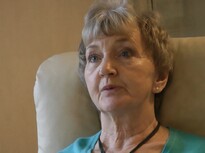
Kate’s mother self-funded care from age 90.
Kate’s mother needed help and support after her husband died. Kate cared for her mother as her frailty increased over the years and her mother now employs a carer to stay overnight, which gives peace of mind to both Kate and her mother.
Kate, aged 69, has a Masters in Education. After a career in education, health and social care, Kate had a good understanding of the system but still faced challenges finding quality care for her mother. Kate has no brothers or sisters to assist in her role.
More about me...
Kate’s mother has lived in the same house for over 50 years and has lived alone since she was widowed. It had been a lonely time and Kate’s mother worried about her security, especially at night. Dogs have always been important to Kate’s mother and after a year without one, she adopted two rescue dogs which really boosted her mood and wellbeing. Though her mobility is limited, Kate’s mother manages in the two-storey house and now has paid help in the house and garden.
Kate helped her mother with shopping, appointments and medication and regularly stayed overnight to keep her company. Eventually it became clear her mother could not cope overnight on her own and Kate began to search for a care agency. Kate contacted the local council who were very helpful and provided a list of approved agencies who could offer overnight sleep-ins. She also searched on the internet and looked at CQC reports. Kate’s mother did not have needs or financial assessments since Kate knew that her mother would not receive any funding for her care as her income and savings were over the threshold. When she joined a local carers’ group, Kate was advised to apply for Attendance Allowance and the group keeps her up to date with facts and figures, providing an advice hub, workshops, and a helpline.
Kate and her mother have been very pleased with the service of the agency they chose. A carer stays each night and sees that the dogs are exercised, the house secure and Kate’s mother has her medication. The same two carers have visited for 2 years, giving continuity and peace of mind which is so important when people are coming into your own home, especially overnight. The care, and other domestic help, is paid for from Kate’s mother’s Attendance Allowance, pensions and topped-up with savings. They are careful with expenditure, prioritising this overnight care with Kate attending to any needs, such as washing and shopping, during the day. Kate’s parents set up Lasting Powers of Attorney 15 years ago. Kate feels this is as important as drawing up a will as it has made it much easier for her to manage her mother’s affairs.
Kate says that LPAs are really important and decided to set one up for herself.
Kate says that LPAs are really important and decided to set one up for herself.
Well, yes, I mean, we, it was set up for Mum and Dad probably 15 years ago. We, and we, they said it would, they thought then that they were getting into their eighties, towards their eighties, I suppose. But they thought it would be a good idea to have it set up. So, we did. We never actually needed it for my dad. You know, he died before it was ever necessary, and it was probably only six years ago that Mum said: “I’m finding this difficult, now.” And we, you know, we activated it, basically. So, it was well set up in advance, and it’s prompted me to set up my own, because you never just know, do you? [Laughs] If anything happens to you, you need it for yourself, really. So yeah. In some ways I think it’s as important as a will, really, have power of attorney set up.
Just thinking about that, then, how, would you say that there isn’t a time that’s too soon to do that sort of thing, or, I mean…
I suppose it depends on your personal circumstances, but often for people living on, on their own or something, you, nobody knows if they’re going to be knocked down by a car. You don’t know if something catastrophic’s going to happen. Please God it doesn’t, but at that point, at least you’ve got a system in place that says, financially, things can be activated and looked after, and you don’t have to go through the court for every payment, or something. So yeah, I think power of attorney’s really important [laughs].
Kate checked what she was entitled to but did not have a full assessment.
Kate checked what she was entitled to but did not have a full assessment.
So, you perhaps didn’t go through the assessments for either the needs or the financial assessments that…
No. I think I was aware that we wouldn’t qualify, but I… double-check – no, I did double check, actually – when I talked to them about it. Yeah, I checked about any financial entitlement, and I registered with the Carers Agency and I talked to them. They were very good, and they told me about Attendance Allowance and also what the thresholds were, so yeah, I sort of made sure I was [laughs] up to date, I suppose by talking to them, and they’re very good.
Kate’s mum was interested in moving to sheltered accommodation but it was not suitable for her dogs.
Kate’s mum was interested in moving to sheltered accommodation but it was not suitable for her dogs.
We talked about her moving to a sheltered apartment and in many ways, that would have been a really sensible thing to do and then maybe just having daily care popping in, to make sure she’s had her tablets and stuff like that and do some shopping. But she really wanted her dogs. And you really can’t find anywhere that’s really dog-friendly [laughs]. We tried. That was plan A.
And so your mother would have been happy with that?
I think so. I think because if she had people, if she’d had people round her overnight, that she could, knew she could call on, she would have probably been okay, and we could have just put in some supplementary day care. But the dogs were the issue, really.
But the dogs are playing a big part in her…
…mental wellbeing, actually – yes.
Kate realised her mum could not be on her own at night so employs nighttime carers through a care agency.
Kate realised her mum could not be on her own at night so employs nighttime carers through a care agency.
I was very impressed. They came, the manager came to the house. She must have spent a good couple of hours doing a really thorough risk assessment. Got to get a good perception of what my mum was looking for in terms of need, and then very, very quickly, came up with two carers who then came to the house to meet mum. So that it wasn’t a stranger arriving for the night. Because it’s so important when you, you’re letting somebody into your house, and particularly when they’re sleeping overnight. You’ve got to feel absolutely confident that you’ve covered all the bases in terms of security and support and that your, you know, your relative’s going to get the kind of care they’re looking for. And they’ve been wonderful.
What’s your mum’s relationship like with them, would you say?
Marvellous, really [laughs]. Yes [laughs]. They can do little wrong [laughs]. Yeah they’re very good, you know, they’ll, they arrive at 10 and leave at 7. It used to be 8, and 8 was better, but they’ve cut back an hour, but that was good, so they’ll often walk the dogs, take them for a last-minute walk. They’ll make sure she’s had her tablets and make sure everything’s locked up properly. Mum gets on really well with them, and its company for her, even at the end of the day. It’s company when she hasn’t seen anybody perhaps through the day.