
Ray
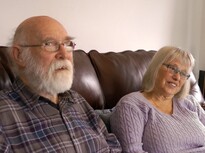
The diagnosis process for Ray was difficult due to the restrictions of the Covid-19 pandemic. He visited his GP after his family noticed that he was repeating things. He was referred to the memory clinic and was given his diagnosis over video call.
Ray is a retired headteacher. He is married to Barbara and they have two children. Ray has a diagnosis of mixed dementia, Alzheimer’s disease with Vascular dementia.
More about me...
Ray and his wife have always enjoyed travelling in their caravan. Before Ray’s diagnosis they used to spend a third of each year on holiday. When at home, Ray has a CD player which he uses to play country music and enjoys dancing in his living room. Ray and his wife like to keep busy and enjoy spending time out of the house. Ray’s local church offers lots of activities that Ray gets involved in. He goes to a pottery class, guitar lessons, table tennis and curling. He has also started going to Men in Sheds to socialise but with the aim of being able to create something as well. Ray and his wife sometimes go to a dementia café where Ray can speak to other people living with dementia. However, as the carers go along, he sometimes feels that the opportunity to talk freely to others about his experiences is limited.
Ray loves to listen to music and dance along.
Ray loves to listen to music and dance along.
Ray: I don’t have anything which is a hobby, I don’t think. No, I haven’t, I haven’t got a hobby. I don’t know about if I’m just in the house, I don’t know, I don’t know what I do really.
I see there’s lots of CDs over there; do you like listening to music?
Ray: Oh well I have been, I have been doing that, yes, yeah [laughs].
Barbara: And a lot of post-it notes [laughter] to remind you what to do isn’t there?
Ray: Mm?
Barbara: There’s a lot of post-it notes to remind you what to do.
Ray: That’s right, I get. Because I, I’m having to learn things that I didn’t know before.
So there’s like kind of new strategies you’re using putting post-it notes around?
Barbara: Well yes, and that, that’s certainly; so you can see them all over there [laughs] because you just couldn’t remember how to do things, could you, and I didn’t know how to do them but I had to find out, and so the post-it notes are, are reminders for that.
So, are they kind of like instructions on how to use the CD player and everything?
Barbara: Yeah, yeah, yeah.
Oh. And do you find those help you?
Ray: Oh yeah, I use it, yeah, yeah, how to get, how to get a nice loud [laughter] thing sometimes.
Barbara: I didn’t put that on [laughter].
What kind of music do you like listening to?
Ray: All those things there more or less [laughter].
Barbara: What are they?
Ray: They’re more or less the, the same, you know. I mean some of them, you know, you’re looking at the, all those things, I mean some of them are mostly male, you know, and the other ones are female, so.
Barbara: [Laughs] You’ve got lots of different artists.
Ray: Oh yeah.
Barbara: But you like a lot of, a lot of country music don’t you?
Ray: Dixie; what’s, what’s the, what’s the, what’s the?
Barbara: Dixie Chicks you like.
Ray: Dixie Chicks, I like them; I’ve got two of theirs.
Barbara: Celine Dion.
Ray: What?
Barbara: Celine Dion.
Ray: Oh yes, there’s another one who’s very good, yeah.
Barbara: [Laughs] Shania Twain.
Ray: Yes, Sha.
Barbara: I know these better than you do. [talking together]
Ray: Barbara’s been looking, very well. [Barbara laughs] So yeah, but I’ve had these quite a long time in actual fact, you know.
Barbara: You’re actually probably using it more.
Ray: Yeah.
Barbara: I mean, because really before that you, you, you used to play a lot of golf; we wouldn’t be in that much, to be honest, we’d be out doing things. Now obviously things have changed; well, we do still go out doing things. What things do you like doing down at the church particularly?
Ray: Oh yeah, yeah. Mind you, here I do things when these are on.
Barbara: Yeah, you dance.
Ray: I dance on my own. [Barbara laughs] If you, if you wanted to come and [laughter] dance with me it was really nice, all over [laughs].
Wow.
Ray: But it just helps me as well, because I think it’s fun.
There’s lots on offer in Ray and Barbara’s local community.
There’s lots on offer in Ray and Barbara’s local community.
Barbara: There’s loads and loads of things that we could do and…
Ray: I mean while we’re, while we’re playing.
Barbara: Table tennis.
Ray: Table tennis.
Barbara: Oh yeah.
Ray: Down the bottom end.
Barbara: There’s board games isn’t there?
Ray: There’s, yeah, there’s.
Barbara: There’s a Scrabble group [laughs].
Ray: Our table’s out and they’re; what are they doing?
Barbara: Well Scrabble mostly.
Ray: That’s right.
Barbara: It used to be, it started off just table tennis and there weren’t a phenomenal amount of people going, perhaps six, eight maybe, so they’ve then decided, well there’s, they opened it up for other games, and actually [facilitator]’s got things like Velcro darts and sort of hoops on a, you know, hoopla type thing, although they’re not used, I have to say, because the people come and play Scrabble, a lot of people play Scrabble, chess, some very serious things go on down the other end of the room. [laughter]. But, so it’s nice actually because it’s, it’s another, another activity so yes.
A sociable space isn’t it?
Barbara: Yeah, yeah.
But I mean table tennis is fun isn’t it?
Barbara: It is.
And it’s really active.
Barbara: It is. It is, it is I know [laughs]. But, as I say, and it is fun.
Ray: Yeah.
Barbara: But I don’t know whether it’s…
You have a laugh.
Barbara: Yeah, you do have a laugh. More so than badminton and tennis, I don’t know whether it’s because you’re so physically close, I don’t know what it is, why it’s, it is like that, but it is [laughter].
It’s fast as well, like you’ve got, you know.
Barbara: Yeah.
That sounds fun, yeah.
Barbara: Mm, it’s good for your reflexes, yeah.
Ray: Yeah, and we can have a cup of a tea or coffee as well [Barbara laughs] can’t we?
Barbara: We do have to, well no we don’t have to.
Ray: And biscuits we do have.
Barbara: It’s all free.
Ray and Barbara moved from a remote village to a town with better connections.
Ray and Barbara moved from a remote village to a town with better connections.
Barbara: So yes, we can drive here. But the [later life] project wasn’t in existence when we came and that’s what’s made the big difference to us. But there are still more things. There’s more places we can walk to, we can go, there’s cafés we can go to, we can walk and we can go and have a scone, walking along the river, you know, there’s quite a, we live. We were on about here and [town], in fact our friends that live at [village] wish they’d got a [later life] project in [town], which they haven’t obviously. Because there’s [venue] as well, because Wedneday there’s a film in the morning, then you can have your lunch, then you can do a craft activity in the afternoon and, you know, it’s anybody. We’ve, we’ve, because it’s table tennis, because we come back for table tennis so we don’t ever do the craft activity but, you know, that’s something else. And they’ve got a warm hub on a Tueday now, I can’t remember what the times were with them, we’ve not felt the need to go to it, but, you know, it’s somewhere else people can go and meet other people.
Yeah, that sounds really.
Barbara: Yeah, it, it is actually, I think it’s, I would never imagine we’d have had all this, to be honest, but it has made so, such a big difference to us.
And did you say that you walked to some of these groups, Ray?
Ray: Mm hmm.
Do you go on your own?
Ray: Yeah, yesterday I was walking.
Barbara: Well normally I would be there.
Ray: To go and play table.
Barbara: And then [name] next door gave him a lift, but.
Ray: Oh yes, actually yes, and obviously the, I came out of the front and I was just, I’d only just stepped over to the other side and this car stopped and told me to get in [laughter].
Barbara: But you walk back by yourself don’t you?
Ray: Yeah, yeah, so.
Ray has found some groups that are accessible for people living with dementia.
Ray has found some groups that are accessible for people living with dementia.
So, what’s Men in Sheds? What does that [Ray laughs] involve?
Ray: It’s men in there [laughter] talking.
Ah.
Barbara: They’ve only just started it and for the first week they just handed a few things around talking, well you just went and chat really, and they were talking to you, and you, you came out quite positive, you came home quite early, didn’t you, but you were still quite positive.
Ray: Well inside, inside this, it’s a.
Barbara: Shed.
Ray: This shed.
Barbara: Shed, like a container.
Ray: Are, are lots of machinery.
Barbara: Mm.
Ray: Which you, people use to do things with, like cutting, it could be cutting wood, it could be cutting metal, things like that. And, and I was not really sure about something like that; I don’t want to, to go and be, be doing something to make something and, and then find out that I’m not, it, it’s not for me and that I couldn’t do it.
Barbara: Mm.
Ray: You know, and I certainly didn’t want to cut my hand off or anything like that because some of them looked really, you know.
Barbara: Well, they will do, yeah.
Barbara: The things that whizzed round and stuff; I’d seen them before in those sort of places actually.
Ray: But, but they put your mind at rest didn’t they?
A social prescriber visited Ray and suggested some local activities.
A social prescriber visited Ray and suggested some local activities.
Ray, if you’re able to give a piece of advice to someone that might be in a similar situation to you and struggling with their memory, what would you want to say to them?
Ray: Oh blimey [laughter]. Have a good wife [laughter]- and find things to do – with other people.
Barbara: Mm. But that, that then; you need help to do that though don’t you?
And that’s, that’s perhaps something we did actually, as I say, we did have the social prescriber round, didn’t we? And she was going to go with you to Men in Sheds but they hadn’t started at that point and then nothing actually happened with that. But that is perhaps something that, I don’t know, it was sort of like after, when he’d had his fall and he did, because he had said he wanted to play golf, but then you weren’t wanting to play golf; so, it was a difficult time really. But I would say that it’s definitely worth the social prescriber.
Someone to point you in the right direction to, how to find these places.
Barbara: Mm, yeah, it’s worth a start, worth a try, yeah.
A heart condition means that Ray is restricted in which dementia medication he can take.
A heart condition means that Ray is restricted in which dementia medication he can take.
And have you been back to the memory clinic since or?
Barbara: No. What happened then was they did ask about did we want referring to the Alzheimer’s Society.
Ray: Mm hmm.
Barbara: And to talk about medication; because Ray’s got a left bundle branch block in his heart this would be the main three medications he can’t take, there was only one he could take. We had three cancelled appointments with the nurse to come round to talk to us about it, and then eventually a doctor came, who actually, I have to say, was very helpful; this was after we’d, he’d had the fall, it was after the fall. And he tried Memantine, he’d agreed to go on a trial of Memantine, which you had done, and he was on the titrate, so he was up to the maximum level. Then we saw a neurologist because of his fall and then that was diagnosed he’d had a seizure; so, because of the seizure he had to stop taking the Memantine. We saw another neurologist, this is nothing to do with the memory clinic, this is separately, we saw another neurologist who said he thought he didn’t see why he couldn’t be on the Memantine. When I contacted the memory clinic about the seizure and he’d basically had to come off they said they would then discharge, be, probably be discharging him from the memory clinic if he couldn’t take the medication, which I must say I found very hard. Anyway, he has started again on the Memantine on a; what do they call it? A cautious amount and we had, [clinician] came round a month ago it must, no, about two weeks ago, I think, he’d done a month on the lower amount and has been stepped up.
It was a big step for Ray and Barbara to move house but they are happy that they did.
It was a big step for Ray and Barbara to move house but they are happy that they did.
But it’s been a good move coming here evidently?
Barbara: Oh yeah, yeah. I mean I must admit although Ray hadn’t had his diagnosis, I do remember saying to you, “Do you think,” because obviously there was quite a lot to do, “do you think you can cope with it?”
The move?
Barbara: Mm, and what we were doing, and your response to me was, did I think I could, and I said, “Yes, I think I can.” And you said, well you supposed you could as well, otherwise we couldn’t go ahead. But I mean it was mostly down to me, wasn’t it?
Ray: Yeah.
Barbara: So…
So, thinking back, I think you said way back in 2016 you started thinking about moving, moving out of the small village. So, it was sort of thinking of the future and just….?
Barbara: Yeah. Yeah, oh yeah, just, yes.
Being somewhere that was a bit more connected?
Barbara: And it was fine while we were mobile, you know, both got cars, so did what we wanted to, it was fine, not an issue, but, you know, there comes a time when you think, well we didn’t know it’d be quite so soon, I have to say, that you won’t have two cars or, you know, won’t have one car maybe, we can manage here, especially now I’m getting food deliveries from Tesco’s or whatever, yeah.
Ray can’t find the right word.
Ray can’t find the right word.
Where do you go, where do you like to go in [seaside] for your lunch? You said you’d found somewhere nice?
Ray: What was it called? [laughter].
Barbara: I knew this was coming [laughter].
Ray: The, the some, the some?
Barbara: The Fishermen’s.
Ray: That’s it, I knew it was to do with fish.
After an MRI, Ray was told he had mixed dementia.
After an MRI, Ray was told he had mixed dementia.
So, what was the diagnosis that you were given?
Barbara: Do you remember?
Ray: Was it – well there were two things weren’t there?
Barbara: Yeah, you know what they were?
Ray: Yeah, but I can’t remember what they were called.
Barbara: [Laughs] It was, it was mixed dementia, Alzheimer’s and vascular dementia.