
Keith
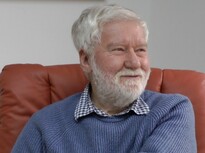
Keith likes to keep busy and attends a variety of activities each week. He goes to exercise classes and a dementia support group twice a week. He is also part of a singing group and is a talented artist. Keith set up a painting group in his village.
Keith, aged 73, has a diagnosis of Alzheimer’s disease with vascular dementia. He is married and lives with his wife in a village. Keith is now retired but first worked as a panel beater and then went on to own a health and safety business.
More about me...
Keith believes that his memory started to decline after he hit his head on a garage door. His wife did start to notice that he was forgetting names before the head injury but when Keith couldn’t remember the name of someone he used to work with, he decided to go to his GP. Keith was referred to the memory clinic and went through a series of assessments and scans. It took three years for him to receive his diagnosis of Alzheimer’s with vascular dementia. This was a very stressful time for Keith and his wife. Keith takes daily medication for his memory which he feels is helping. To help remember important dates and appointments, Keith’s wife writes events on a whiteboard which he checks every day. He also keeps a diary which he uses to help jog his memory.
For Keith, the groups he attends each week are very important to him. He goes to some with his wife and some independently. He takes part in an exercise class twice a week and goes to a dementia support group where he plays sports like snooker and table tennis. As Keith has always enjoyed singing, he and his wife go to a singing group for people living with dementia. He enjoys spending time with other people who have memory problems as they can chat about their experiences. For many years, Keith has run his own art group in his village. He is a painter and photographer and so once a week he goes to his group to paint.
When he has any free time between going to groups, Keith likes to keep his brain active by doing word searches and quizzes. He also enjoys playing cards and dominoes with his wife, as well as doing one-thousand-piece jigsaws. Keith and his wife make sure they go on a daily walk around their village and, when they can, love to go on holiday abroad.
Keith remembers a vintage car he worked on.
Keith remembers a vintage car he worked on.
But when I worked at [name] Panel Works the man who owned, owned the company was very into old vintage and veteran cars and he’d go to an auction and buy this old dilapidated car and we would have to renovate it [laughs]. I mean the oldest car he had was a 1920 Clyno; you’ve never heard of it have you? No, no, no, no. And it needed quite a lot of work, it took us, in-between doing repairs on other people’s cars any spare time we had we spent doing his car, it took us nearly a year to renovate it.
Gosh.
Yeah, but it was a lovely car.
Yeah.
Yeah. And I used to go all the motor shows with it, you know, the old vintage cars and veteran car rallies as well, yeah.
Keith and his wife go to a fitness class each week.
Keith and his wife go to a fitness class each week.
Yeah, I’m reasonably fit, I keep quite active; we go to a, a group where we do activities in the, in the Reading Room in [village], which keeps us sort of mobile you might say.
Do you want to tell me, do you mind telling me a bit more about that, what sort of thing do you do there?
OK, well I, well what we do, it’s, it’s a sort of, a fitness thing really, basically, and you just sort of do light physical exercises; I mean there’s about, about eighteen or nineteen of us, I think, something like, maybe, I don’t, maybe less, I don’t know, anyway; ten/twelve I’m told, all right, and we all do, all do different exercise, everybody’s different, you know, like at different fitnesses, so they make allowances for everybody, and it just, and it’s somewhere to go, it’s socialising and, as I say, keeps you fit, Move it or lose it; that’s the name of it.
Oh right [laughs] very good.
Move it or lose it, yeah.
Keith likes to do all sorts of puzzles and games.
Keith likes to do all sorts of puzzles and games.
Do as much as you can while you can, because you don’t know what’s going to happen round the corner. All right, I try to keep my brain active, I do quite a lot of word search and things like that which just keeps, keeps my head going, I think. Sandrea gets a bit [laughs] sick of it, you know. But I like, I like doing ‘em because I’ll switch off and just sit there and, you know, do, do a word search and what have you, yeah; and do a couple of quizzes as well maybe, yeah. And we, to keep our sanity we play cards quite a lot [laughs] and dominoes between us, yeah.
Do jigsaws to keep me occupied sometimes, you know, I like doing large jigsaws like a thousand pieces and that, you know, it takes.
Oh gosh.
It takes a lot of time to do it, a lot of thought and oh yeah we play cards and dominoes with my wife and, yeah, do that quite a lot; that kills a bit of time.
Yeah. And do you feel that that’s quite a good thing to do for such as mental agility as well?
Yeah, because it’s keeping your mind active isn’t it, you know, you’re not sort of sat and vegetating.
Keith’s wife writes all their events for the week on a whiteboard.
Keith’s wife writes all their events for the week on a whiteboard.
What, what sort of thing; do you have any sort of strategies, if you like, that you, you know, so that you, to help you remember your appointments or… well I can imagine that’s your strategy is it? [Laughter.]
Exactly, yeah, yeah, yeah, yeah. Sandrea looks, yeah, we’ve got a board in the living room and it’s got all the appointments on it and the days, the times and what have you. And I look at that on a morning and think all right well I’ve got that today and that tomorrow. It’s full is the board like with all, all these different things, but yeah, and Sandrea does a marvellous job for me and…
That sounds really, like a really good idea; so what is it, like a?
All it is a whiteboard with the dates on of different things where we’re going; I mean it’s full at the moment, I think just about, of different, different things that we’re going to or people coming here or whatever, you know. So yeah, I find it very helpful.
Meeting people in the later stages of dementia motivates Keith to make the most of everyday.
Meeting people in the later stages of dementia motivates Keith to make the most of everyday.
I go there on a Wedneday and a Friday and we do different activities, which is Dementia [support], and what have you, and it’s very I like going there. Meet people like myself who have got dementia, some are a lot worse than me, some aren’t as bad as me, and we do lots of different activities. We play snooker, table tennis, cards, dominoes, quizzes, a bit of colouring in and some, on some things, it just depends what they decide to do really. But I find it enjoyable; it gets me away from Sandrea so Sandrea can do her own thing rather than looking after me [laughs]. Yeah, it’s, it’s different, you know.
Well, that sounds very good.
It is, it’s very good; and I’ve learnt a lot from going there, because they’ve got, I thought “all right, I’m not too bad” but when I see people who go there are a lot worse down the line than what I am, I think well one day I’m going to end up like that. So, I’m trying to make the most of what I can while I can and, and I’m not doing so bad, I don’t think, touch wood.
Oh, that’s good then. So, you take, you take that as a positive really about, that you’re, you know, you’re sort of embracing what you can do now?
Oh yeah. Well, you’ve got to use what you’ve got and, all right, I don’t know, nobody knows how long they’re going to live or what’s going to happen in the future. You’ve just got to make the most and the best of what you can while you can. And that’s what I’m trying, well that’s what we’re trying to do.
Keith enjoys his group where there are people with different forms of dementia.
Keith enjoys his group where there are people with different forms of dementia.
Keith: It’s a group of people like myself and we go there and we have a discussion. And what happens, when we start off going, you take your partner with you and then we go into separate rooms where your partners go in, your partners go into one room and they talk about, about us.
Partner: Carers.
Keith: Carers, yeah, and we sit in a room and talk about what we’ve been doing, and what have you, and what our carers do for us. And it’s quite interesting really listening to what other people are like and how far they are down the road of dementia and, because everybody’s different and it’s all down at different stages. So, it’s quite interesting, yeah.
Yes, because there’s, well about eighteen or nineteen of us and we go there and just, what it says, sing, you know. We stop for a coffee, for a break, and what have you, have something to eat and a sandwich or something and a drink, and what have you and start again and do a bit more and then when we’ve finished, we come home. It’s nice, yeah, it’s great. They’re nice people, friendly, and they’re the same, the same like me, you know, got dementia. So, we’re all mixing together and, you know, talk about different things, how it’s affecting different people because everybody’s form of dementia is different and it affects them in different ways. So, it’s nice to listen to other people what they’re doing and, how can I put it? How far down the line they are in their, with their dementia.
Taking Donepezil for Alzheimer’s and vascular dementia has helped for Keith.
Taking Donepezil for Alzheimer’s and vascular dementia has helped for Keith.
So, you had your scans and they, they sort of said what it was; did they give, have they, have they prescribed any medication at all for your memory?
I take; what do they call it? Demetsa, Demetsapol.
Donepezil.
Donezol.
Yeah. And do you feel that that’s helped?
I think it has, yes, yeah, yeah, but who knows, it might, you know, it appears to have to done but it might be some, I don’t know, you just don’t know, yeah. I take it, I take it on a, on a daily basis, so yeah, keep taking it.
People have told me that after they’d taken, when they’ve been prescribed their meds they feel like things are just a bit more well connected than they were before.
Mm, I believe they do, yeah, slightly, yeah, yeah, yeah.