
Andrew
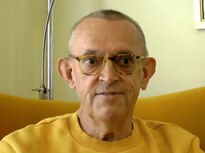
Andrew received a young onset dementia diagnosis at his HIV clinic after speaking to his consultant about memory concerns. Following his diagnosis, he was prescribed Galantamine which he feels has greatly improved his symptoms and improved his memory test results. Andrew is an active member of his local LGBTQ community.
Andrew, aged 68, lives with his partner in a city by the seaside. He is a retired languages teacher and is fluent in French and German. He has lived in Spain for many years and still visits regularly. Since his diagnosis he has been working on his Spanish fluency.
More about me...
Andrew takes part in university research projects which are promoted by the LGBTQ group he belongs to. He thinks it is important to share his experiences with researchers but also finds that he benefits personally from being involved in research studies. Andrew goes to the gym at least 3 times a week and likes walking along the seafront with his partner and shopping in the city. He enjoys listening to music, reading thrillers, and going on holiday. He is also part of an online dementia support group which gives him the opportunity to speak to people around the world about their experiences of living with memory problems, something which he finds quite empowering.
Living with dementia Andrew says is about what you can and want to do.
Living with dementia Andrew says is about what you can and want to do.
What would your advice to, be to someone who, who is in a similar, you know, has recently had a diagnosis perhaps and they’re worried about their, what they can do?
I think you’ve got it right there, the focus on what they can do rather than the, the focus being on what they can’t do; and that’s going back to the media, I think they’re focusing too much on what people can’t do once they have a, a dementia diagnosis, it should be the other way round, what they can do, yeah.
Using his smart speaker, Andrew adds tracks to his ‘favourite songs’ list.
Using his smart speaker, Andrew adds tracks to his ‘favourite songs’ list.
Yeah, when I, when I joined up with Alzheimer’s UK I was matched up [coughs] with a series of research problems, projects and clinical trials and whatever, and one of them was something called Music for my Mind; that was quite fun. They asked me to tick five artistes that I, I enjoyed, so I gave them the names and they fed back a, a playlist for me and; I’d already been doing that with Alexa, someone told me how to, when a, a track is playing that you’d say, “Oh I like that track”, then she’ll, if you say, “Play my favourite songs,” she’ll go through the whole list at random.
Oh right.
So that, that is quite a bit, a bit of fun which obviously is, is linked very strongly to music; and music is something I’ve always enjoyed anyway.
To help him follow the plot of a book, Andrew sometimes draws a plan of the characters.
To help him follow the plot of a book, Andrew sometimes draws a plan of the characters.
But also, the reading, I really enjoy reading and the Kindle.
Oh right.
Yeah, great for travelling, you can store the books on there, and, and I’m not an avid page turner, never [laughs] I just think it’s a great plus, you know.
Yeah. So, what kind of things do you like to read then?
Oh, usually psychological thrillers; if there’s not a murder in the first few pages then I go onto something else.
They often take, take quite a lot of concentration.
Oh yeah.
Remembering all the different characters that come in though, don’t they?
Yeah, they do, yeah; I’ve despaired on a few and actually done sort of like a tree, a tree plan with, with people and how they fit in and whatever. Only on the odd, odd, occasion where the plot really gets too involved. But I love the way that they, you know, they could lead you on for almost the whole of the book and then everything switches, everything switches round in the last chapter.
Cooking each week has improved Andrew’s confidence in the kitchen.
Cooking each week has improved Andrew’s confidence in the kitchen.
I’ve always done the majority of the cooking but I then stopped completely, I couldn’t cope with it, I couldn’t boil a pan and then use the oven and that sort of thing, and I’ve never really taken [laughs] taken it back. Recently I’ve, I’ve started cooking again.
Oh right.
And having a nightmare because an induction hob is a compete horror to me [laughs], but I’m finding my way round it and getting better, and I’m finding I can cope now with boiling something and heating something up in the oven, and I microwave and…
Getting all the timings together, isn’t it?
It’s a small kitchen so you can reach everything at the same time, it’s not too bad.
Do you tend to follow recipes or do you just kind of think about what you’re cooking as you go along?
[Laughs] As I say, I’ve only taken it on recently and I, Saturday night I do the same thing each week and I’ve now got so used to it that I can go round the supermarket and just pick the stuff that I need and throwing it in; I mean it’s one pan in a casserole that goes in the oven, that’s it.
A psychotherapist taught Andrew different ways of remembering.
A psychotherapist taught Andrew different ways of remembering.
One other thing I’ve found useful is that not this year last year when I was having the, the memory tests with the young psychotherapist, very new to his job obviously and quite bouncy and enthusiastic, and he, he talked about seeing the memory as a sort of filing cabinet and if you don’t remember something immediately then you look through. You search through the filing cabinet until you find the right bit that you need and that’s great because I can get into my memory now and try and remember someone’s name from a programme that I’ve seen recently or whatever, and I think “oh yeah, I’ve seen that actress before, what is she called?” Now a lot of times I would have said “oh I can’t remember” but I, I get into the filing cabinet and I don’t panic about the fact that I don’t remember it. I just think “oh in five minutes it’ll be there” and nine times out of ten it is. So that works very well, and I’m endlessly grateful for the, the idea that, that he gave me of the filing cabinet.
So, so you, you sort of process it in a way that you know that you can look for it in sort of different places sort of thing?
Yeah. And to give an example with names, the exact name probably won’t come up for me but I’ll come up with something similar and then thinking about it you, through that link it will eventually get me to the right name, the name that I need, you know. That’s one process that’s really helpful. The other thing on, on the telly as well, I think “oh I’ve seen that actor, that actress in something else” so it goes back to whatever I’ve seen them in and then back from there to their name and, yeah, it’s very odd.
So that’s like taking a detour, you know, to the?
Yeah, yeah, it’s very odd, isn’t it, the way the brain functions?
No, that’s a really good strategy though and, like you said, not panicking about it, just kind of, I guess, leaving your brain to work in the background kind of thing.
That’s right. Yeah, I mean I thought it was a load of nonsense really. But, [name] he was called, talked to me about the idea but I, you know, thinking about it afterwards, yeah, it’s been helpful. I mean stuff like using a, putting your diary on your smart phone, that went straight over my head. But he, some of the stuff he passed on was very useful and that example that I’ve just given has been, you know, invaluable.
The online group Andrew joins helps the members to see what kind of care and support is available globally.
The online group Andrew joins helps the members to see what kind of care and support is available globally.
And Speak Out with Dementia; so what is that?
It’s a support group that meets on Zoom every week and it was instigated by the [City] LGBT Switchboard and it’s a worldwide support group really.
Oh right.
We have people from America, a chap who lives in Belgium, someone from Ireland, and it’s support in a way that we share each other’s experiences. And also, how each individual accesses support within their community, and the sort of level of support that they’re finding that they’re experiencing, and comparing that with each other. And really, I suppose the final aim is for each of us to get the information, and if we don’t feel that we’re getting enough support or similar support to anyone else then we’re able to begin the first steps of accessing that, mm.
So, understanding what might be out there?
That’s right, yeah, yeah. For example, the guy who lives in, in Belgium, he’s American and he wasn’t getting appropriate support in America so he moved to Northern Ireland and he still wasn’t and now he lives in Belgium and finally he’s got supported accommodation and supportive healthcare staff and he’s very happy there.
That’s a big extreme to go to though, isn’t it?
Well, it is a bit extreme; I don’t intend to travel the world to get the support that would be helpful for me, I’m more inclined to stay put and stick my heels in and, you know, sort out really what, what suits my requirements.
Andrew feels it’s good to talk to people with similar experiences.
Andrew feels it’s good to talk to people with similar experiences.
Yeah, that’s a group, I pop along there sometimes but I don’t feel [laughs] I’m over sixty or I’m well over sixty. There are other support groups, I’m trying to think. Yes, there’s the, a local café they, we meet there. I think that is part of the Speak Out with Dementia really, but it’s more of a social event, we meet for coffee and cake. Just have a good old chat, and the two people from the, the Switchboard are there, [name] and [name], and it’s really good to have a chat and pass on what’s happening to us from day-to-day.
So, I’m trying to sort of understand what it is about kind of talking to other people with dementia or memory problems, and you’ve said a couple of times that you all, sort of, share how you’re getting on and compare notes sort of thing. And I’m just trying to sort of understand how you think that, how you feel that really helps you all?
It’s something that comes naturally rather than me say, “Oh we ought to share our experience and how are you finding day-to-day life?” That is just part of the, the social contact. I think the most important is the social contact, having a good old chat that, with people who are experiencing life in similar ways to yourself.
Yeah. Yes, I think I’ve heard that from other people that it’s nice to be in sort of a space where you feel like you don’t kind of have to [laughs] I don’t know, maybe cover up your memory problems, you know, you can feel free to be yourself, kind of thing.
Yeah. I mean we don’t say to each other “oh how are you?” and “how are you nowadays?” and “how are you getting on?” da-de-da-de-da. It’s a social event, it’s quite important to people who live on their own, I think. I’m very lucky I’ve got a partner I live with, but lots of people don’t have that. Lots of people don’t have social contact perhaps, so it’s a good time for us to, to get together.
The memory clinic tests showed that Andrew’s memory had improved after a year.
The memory clinic tests showed that Andrew’s memory had improved after a year.
That’s an annual series of memory tests and I have tests from a psychotherapist there each year and luckily, they’ve discovered that my memory’s actually improving which, yeah, that’s, that’s good news for me.
Absolutely.
And yeah, that’s, that’s the one a year testing that assesses the level I’m at as far as memory goes, and cognitive functioning.
And I think you said you were on?
Galantamine
Yeah?
Galantamine.
And you think that’s, has that helped your memory?
Well, I think my memory is better certainly than it was, so it must have had some positive effect, and I’ve not experienced any negatives ones so must be, must be working [laughs] and.
Yeah. So yeah, so it’s you, not only do you feel your memory’s a little bit better, it’s been measured as being a bit better?
It’s been measured as being, being a bit better; I mean to all intents and purposes I carry on life as if I haven’t got any memory problems, I’m able to function, you know, as much as I would like to do, in fact perhaps better than when I first retired, you know, sort of breathing a sigh of relief when I first reached retirement thinking I don’t need to cope with these things anymore; and perhaps I was a bit too complacent and a bit too lazy. But I’ve made much more effort over the past two years to concentrate; and all the good, all the stuff that’s recommended to help improve your cognitive functioning.
After a routine check-up Andrew was sent for a lumbar puncture and a scan.
After a routine check-up Andrew was sent for a lumbar puncture and a scan.
So, I think on the phone you were telling me about how you came about the diagnosis, you were, you were being checked for your antiretroviral drugs?
That’s right, yeah. It was at the back of my mind, I’d been taking them, oh for many years, over thirty years, and there’s not really any research that I could find as to what the side effects might be from taking the, the medication for so long, and I spoke to the consultant at the [health] Unit and he decided that as part of his, his conclusion to that, that concern he’d put me through a series of memory testing, well sort of a spinal test, a brain scan and whatever, and that was how the diagnosis came about.
I was very lucky through the [health] Unit to have my series of tests very quickly and it came about that lots of people are waiting around four years to have those tests carried out. So, as I say, I was very lucky for it to be done very fast.
And you had a thorough set of tests by the sounds of it?
Yeah, yeah.
The scans and…
I had the brain scan, I had the test, the memory test and I had a lumbar puncture as well; I’m not quite sure where that fitted in; and the results, I can’t remember if there was anything else but I don’t think so, but that, the results led to me being prescribed the medication.
Yeah, yeah, mm, which has helped; so that’s a good, good outcome isn’t it?
Mm.
Like many people, Andrew doesn’t like thinking too much about the future.
Like many people, Andrew doesn’t like thinking too much about the future.
Can I just ask you if you’ve thought about the future of whether you might need some extra help?
[Laughs] There’s a pause here.
You don’t have to answer it if you’d rather move on, but.
Yeah, I’d rather not talk about the future, if you don’t mind.