
Dave
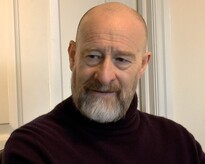
Dave began to notice his father’s memory issues after he began to forget to turn up to events. His father was first diagnosed with cognitive impairment, but his memory issues continued. When Dave took his father back to the doctors a second time, he was eventually diagnosed with Alzheimer’s disease. Dave found that getting a diagnosis was prolonged due to the Covid-19 lockdowns.
Dave cares for his father who has Alzheimer’s disease.
More about me...
Dave began to notice that his father was having memory issues after he began to forget to turn up to the plans they had arranged. Initially, they adapted to this by calling him to tell them they were on their way or to check that he was en-route to meet them. However, Dave noticed that his father was forgetting to take his medication. This caused Dave to become concerned and take his father to the doctors, who diagnosed his father with mild cognitive impairment. However, since Dave’s dad continued to show symptoms throughout lockdown he decided to contact the doctors again. It was on this occasion that Dave’s father was diagnosed with dementia. Dave felt that getting a diagnosis during lockdown was difficult. It took six months until he got the official diagnosis of Alzheimer’s disease. The delay in diagnosis also impacted Dave’s ability to apply for support because without a diagnosis he was unable to apply for disability support.
Dave decided to stay with his father through lockdown as it was apparent that he needed support. Dave felt that his father would not be okay managing his medication, general care, and understanding the lockdown rules. Due to his Alzheimer’s, Dave’s father struggled during lockdown as he did not understand that he could not go outside. His father would have issues remembering his PIN or using his card and would visit the bank, not understanding that they were closed due to lockdown. After Dave’s father’s diagnosis, he was also advised to stop driving, which further impacted his father’s independence.
Alongside his Alzheimer’s, Dave’s father has other health conditions that need attention. When lockdown lifted, Dave returned home, and while visiting him, his father had a medical incident. After this incident, Dave convinced his father to move down to where he lived so he could continue to care for him. To ensure his father is still social, Dave has enrolled him in dementia groups so that he can take part in various activities.
Dave talks about his father’s diagnosis and support during lockdown.
Dave talks about his father’s diagnosis and support during lockdown.
Watching a TV programme, we were, for example, watching a two-hour crime drama: an hour in, he’s no idea what’s going on, and I thought, ‘something’s not right here,’ and the very next day I called the doctor’s and from there we went through the process. Obviously through lockdown, made it a bit more difficult to finally get the diagnosis, but then it was confirmed that he had… he had Alzheimer’s, and actually from… so realistically from the start of lockdown, I’ve been with him through… throughout that. So, initially I had to move up there and stay with him in lockdown, not least from the more vulnerability point of view, so I… you know, my family… the rest of my family were here and I went up there just to… to see through until such time as we could get through it. But it came very apparent, very quickly, that he would not be OK on his own, you know, both in terms of… the medication he was having to take, and just generally a care… you know, the ongoing care, but in the situation that we were all in, you know, obviously from one day to the next he’s forgotten that he can’t go anywhere, or nothing was up, and for example he’d try to go to [supermarket]: he couldn’t remember his PIN number, he’d then gone to the cashpoint: it swallowed his card, he’d go to the bank: the bank’s closed, and just those kind of things were what were becoming apparent, so yeah, I went up there and that was it; it took about, I think, six months to finally get the official diagnosis.
Dave describes the negative change in his father when he went back home.
Dave describes the negative change in his father when he went back home.
And interestingly what I noticed was when we would go back to his, he would be far more agitated, far less settled, and that we were still back to this situation where in that, I viewed it as the triggers there were, ‘well, he’s meant to be doing something, he’s meant to be dancing,’ which of course was still all… all off anyway, and he was far less relaxed, which incur… made me much more on… on edge for him being up there, so subsequently… but the right thing to do now, when we look back, was this dual thing, and then it wasn’t that it was from one day he’d live there, and come here : he’d… he’d got used to, over the period of time, to do that.