
John L
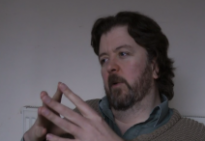
John was diagnosed at the age of 39. Although it took him years to become “comfortable” with his diagnosis, it also helped him to be “less angry” with himself. John enjoys reading and writing, and his audience includes politicians and policy makers.
Ethnic background: White British
More about me...
John was diagnosed with autism at the age of 39. As a child, John had an infection in the bone behind his ear. The first surgery he had was unsuccessful, so John had to go through a series of further operations, which caused him much pain. He remembers transitioning from special education to a mainstream school at the time. Because of his increasingly disruptive behaviour, he had to see a psychologist, but the psychologist blamed John’s parents, making them feel “a lot of guilt and blame”.
John started educating himself about the human condition through psychology readings, which is how he learnt about autism. Although he found many of its aspects “relatable” at the time, it wasn’t until his nephew was diagnosed with it that John decided to go through the diagnostic procedure himself.
He was not entirely happy about the diagnosis though. With his words, “it meant a lot of work in some ways because you actually have to rethink your past”. He suddenly understood “the lack of relationships, the lack of proper friendships”. It took him 2-3 years to become “comfortable” with his diagnosis, a process at the end of which he accepted that the “darkness” is just part of him, not the “whole spectrum” of his personality. As a result, he has learnt to “let things go” and be “less angry” with himself. John believes that autism is a complex condition and he feels that much of what is labelled as autism is “just people being people”.
John describes his working life as “hit and miss”. During his university degree, he worked with young offenders, a job he enjoyed very much, he feels that he learnt a lot about people, and it also put his problems in perspective. He continued working in the field after he finished his studies, but his health gradually deteriorated, and he found that he couldn’t continue to “pretend to be normal”. Currently, he spends his days reading and writing. Although sometimes he struggles “to get out what’s going on internally”, his work has a broad audience of policy makers and politicians. His wish for the future is to have more stability, to travel, have a relationship, and be able to be “happy with achievements”.
John L was sectioned when he was younger and was told he was too sane be there by a psychiatrist.
John L was sectioned when he was younger and was told he was too sane be there by a psychiatrist.
Understand the human condition?
Yeah. Yeah. Because I mean I did find… I did find it very strange, and I mean at one point I did try to section myself, because life was so painful. But that actually turned out to be quite a good experience actually because I mean I actually got to then look at the mental hospital and see people are genuinely mentally ill. And that was sort of a hard moment but, okay, different, not ill. So I knew that much. That sort of 19, 20 - 19 or 20 years old, so. And I, I had a good chat with one of the psychiatrists there, and he said, you know, you're too sane to be in, wanting to be doing this. And it's like 'yeah, yeah'. Although being sane is sometimes a problem. Being [Name] a problem because you have to accept a certain amount of irrationality in, with people. Because that's part of the lubrication of society, is that you have to accept a certain amount of why, of the humorous and …distance and everything else. It's, there's no clear, you know, try to be rational, try to apply things, it just doesn't work for, work. So you have to become more tolerant of that, which I've sort of become calm over time. But it's been a, a long process.
John L found having to rethink his past difficult after diagnosis and he went through a period of grief and understanding.
John L found having to rethink his past difficult after diagnosis and he went through a period of grief and understanding.
John L prefers to think about what is good about being human rather than what is good about being autistic.
John L prefers to think about what is good about being human rather than what is good about being autistic.
But if you look at say, a good example would be the producing of the American constitution. And you've got people who mainly farmed, who made it, you know, so they had a lot of practical things to do, but I had time to think and time to read, and time to understand. And it feels like if anything, we have an increasingly accelerated world, and everything's sort of next minute, next thing, Twitter particularly is a good example of that accelerated input for our media. And it's like, if we just had time to breathe and time to just breathe and takes things in, do the reflecting and everything else, that might actually give you something. So I'm, I'm not quite sure whether what we're talking about is being autistic, or just human sort of traits that we just sort of seem to misappropriate as being special, when in fact they're not really. It's just, you know. If we just stop and breathe and relax, and think, we can try and sort of get an understanding. I suppose, you know, I have an aptitude for trying to learn and think about things. Not everyone does, that's fine. But I don't think that's particularly autistic. I don't think anything of what my skills, abilities and my strengths are, are particularly autism based. They're about my personality as a person. The autism is a part, part of that. But it influences it. I'm not sure it actually is a quality of autism itself. So I'm, I'm still sort of trying to work, work out what autism is, and what it means.